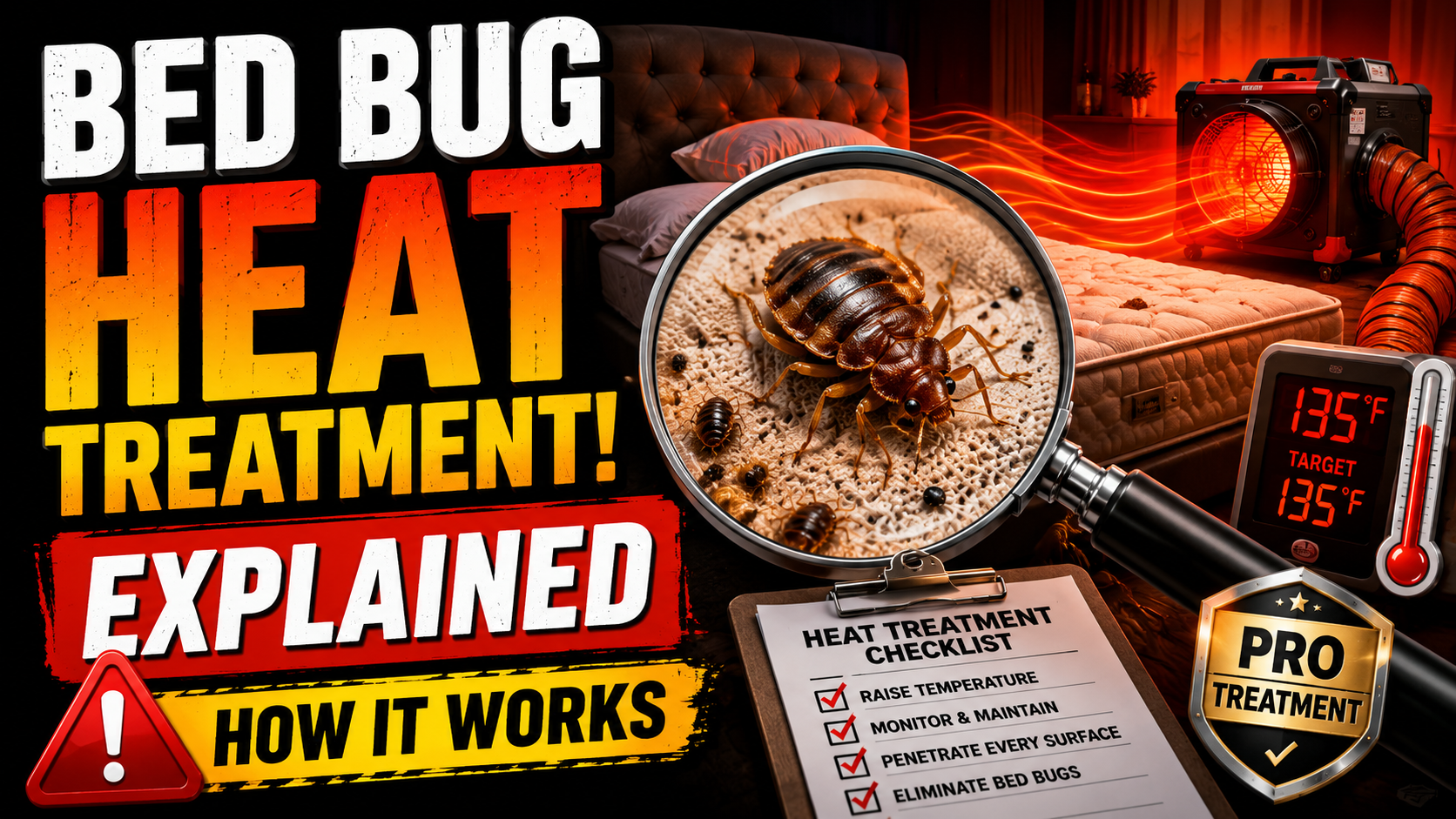
Bed Bug Heat Treatments Explained: Inside Professional Eradication with Richard Barrie
Bed bugs are back. If you work in pest control across the UK, you’ve likely noticed the resurgence over the past decade. What was once a problem largely confined to hostels and budget accommodation is now showing up in five-star hotels, care homes, and residential properties with alarming regularity.
The challenge? Bed bugs are notoriously difficult to control. They hide in the smallest crevices, develop resistance to chemicals, and can survive months without feeding. Chemical treatments alone often fall short. That’s where professional heat treatments come in—and that’s exactly what we explored in this week’s Pest Perspectives Podcast with Richard Barrie, founder of The Bed Bug Experts.
Richard brings over two decades of pest control experience to the conversation, including international work in Libya and Dubai. But his real specialty—and the focus of our discussion—is bed bug management and the science behind heat treatment protocols.
The Heat Treatment Advantage
Let’s start with the fundamental question: why heat?
Bed bugs, at every life stage, have a thermal death point. Expose them to sustained temperatures above approximately 45°C, and they die. Eggs, nymphs, and adults all succumb. This is why heat treatment has become the industry standard for complete eradication.
But here’s the critical bit: simply getting a room hot isn’t enough.
Richard emphasizes this point repeatedly throughout the episode, and it’s worth drilling into. Many pest controllers—or worse, well-meaning property managers—assume that cranking up the heating or bringing in industrial fans will do the job. It won’t.
Professional heat treatments require three essential elements:
Temperature: The entire space, including the contents, must reach and maintain the lethal temperature. But different materials heat at different rates. A mattress in the corner of the room won’t heat as quickly as the air around it.
Soak Time: Once the target temperature is reached, it must be maintained for a sufficient duration. Thirty minutes at 55°C is very different from three hours. The longer the soak, the more confident you can be that every bed bug—including those hidden deep within furniture—has been eliminated.
Penetration: Heat must reach into the fabric of furniture, behind skirting boards, inside wall cavities, and into the depths of mattresses. Airflow management is critical here. Poor airflow means cold spots where bed bugs can survive.
Preparation and Equipment Matter
One of the most valuable insights Richard shares is the importance of preparation. A professional heat treatment isn’t something you can rush.
Before the treatment even begins, the technician needs to:
- Assess the property and identify potential problem areas
- Understand the layout and how heat will move through the space
- Plan airflow strategically to ensure even heat distribution
- Brief the client on what to expect and what they need to do
The equipment itself is specialist. We’re not talking about standard space heaters. Professional heat treatment companies use industrial-grade heating systems, thermal imaging cameras to monitor temperatures in real-time, and carefully positioned fans to manage airflow. This equipment is expensive, which is partly why professional heat treatments command premium pricing.
Richard’s point here is important for pest control business owners: if you’re considering offering heat treatments, you need to invest properly. Cutting corners on equipment or training isn’t just bad for your clients—it’s bad for your reputation and your bottom line.
The Egg Problem
One question that often comes up: are bed bug eggs harder to kill than adults?
Technically, no. Eggs and adults have similar thermal death points. But practically speaking, eggs present a challenge because they’re often laid in the most inaccessible locations—deep within seams, between layers of fabric, in wall cavities. If heat doesn’t penetrate to these areas, eggs can survive and hatch after treatment, leading to reinfestation.
This is why follow-up monitoring is so important, and why Richard has developed his own bed bug monitoring system.
Monitoring: The Unsung Hero
Richard’s Clear View Bed Bug Monitor is a clever piece of kit designed to help identify bed bug activity early. But more broadly, the conversation highlights why monitoring should be a standard part of any bed bug management program.
Bed bugs are attracted to certain materials and textures. A well-designed monitor placed in strategic locations can catch bed bugs before they establish a full infestation. For hotels and accommodation providers, this is invaluable. For pest professionals, it’s an additional revenue stream and a way to provide genuine value to clients.
Post-treatment monitoring is equally important. A follow-up visit 2-3 weeks after heat treatment, armed with monitors, gives you confidence that the treatment worked and provides peace of mind to your client.
The Business Side: Pricing and Positioning
Beyond the technical details, Richard shares some hard-won business lessons.
First: don’t race to the bottom on price. Heat treatments are specialist work. They require investment in equipment, training, and time. Charging appropriately isn’t greedy—it’s professional. Clients who understand the value of proper bed bug eradication will pay for it.
Second: position yourself as a solution provider, not just a service provider. This means offering a complete package: initial survey, heat treatment, monitoring, and follow-up. It means having the confidence to recommend the right solution even if it’s more involved (and more expensive) than the client initially expected.
Third: know your limits. Not every pest controller should be offering heat treatments. If you’re not equipped to do it properly, subcontracting to specialists like Richard’s company is a smart business move. Your clients get the right solution, you maintain the relationship, and everyone benefits.
The Bigger Picture
What emerges from this conversation is a picture of bed bug management that’s evolved significantly over the past decade. It’s no longer just about chemicals and sprays. It’s about understanding the biology of the pest, investing in the right technology, and delivering professional solutions that actually work.
For technicians, the takeaway is clear: if you’re dealing with bed bugs, understand the heat treatment process, invest in proper training, and don’t cut corners.
For business owners, the message is equally straightforward: bed bugs are a growth area in pest control, but only if you approach them professionally. Invest in specialist knowledge and equipment, position your services appropriately, and build a reputation for getting the job done right.
Richard Barrie’s journey from military service through international pest control work to founding a specialist bed bug company is inspiring. But what’s most valuable is his willingness to share the practical, technical knowledge that makes the difference between adequate pest control and genuinely professional service.
Ready to Go Deeper?
This episode is packed with actionable insights on heat treatment protocols, monitoring strategies, pricing specialist services, and the business side of pest control. Whether you’re a technician looking to upskill or a business owner considering offering heat treatments, listen to the full episode now to hear Richard’s complete breakdown and Shaun’s probing questions about real-world application.
The Bed Bug Experts – For more on Richard’s work and monitoring systems.
Subscribe to Pest Perspectives Podcast for weekly episodes delivering field-tested tactics, expert insights, and the practical knowledge you need to run a successful pest control operation.