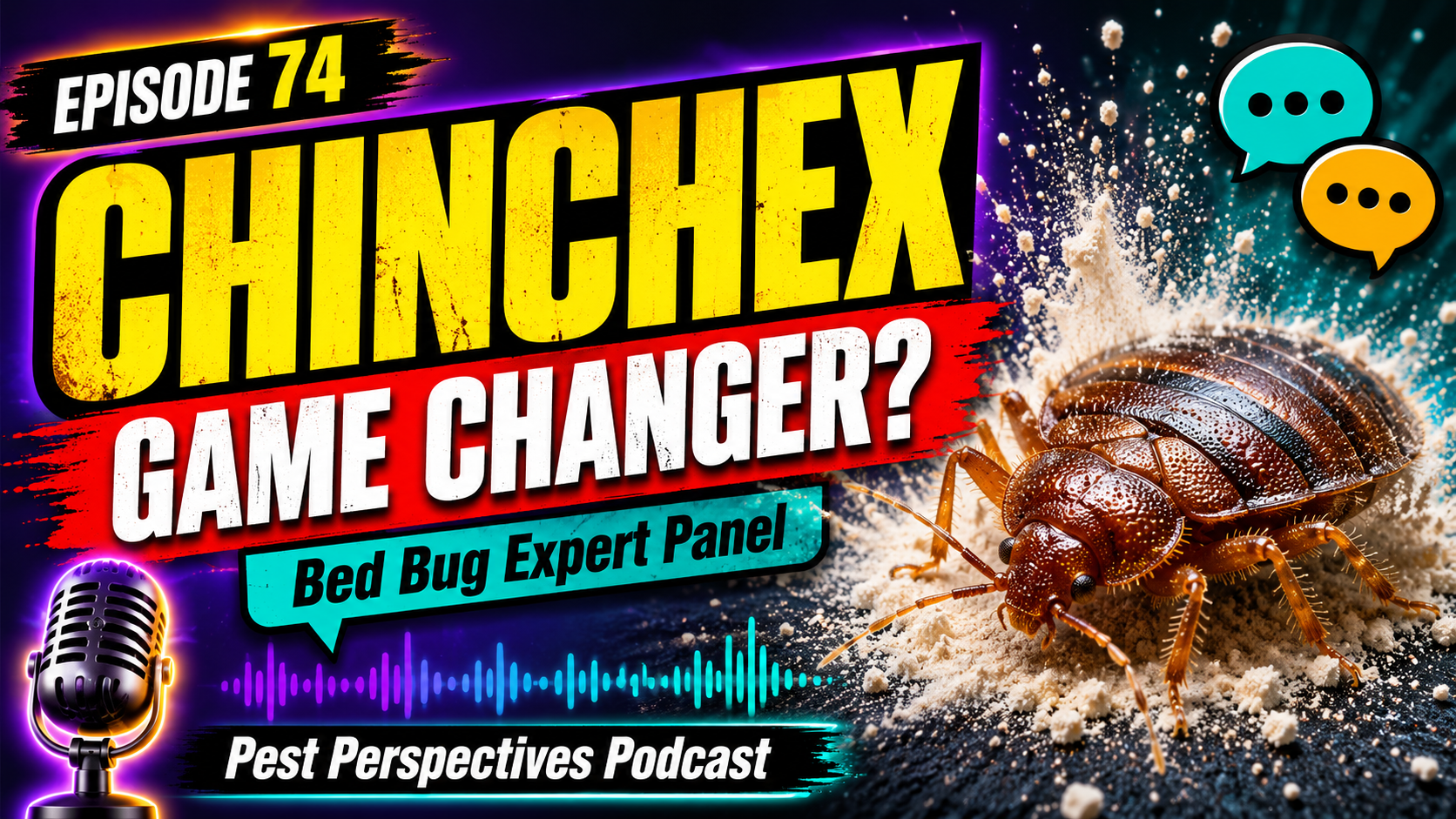
ChinChex Bed Bug Control: Why Is It Causing Such a Stir in UK Pest Control?
Related Episode
Bed Bug Control: Does ChinChex Really Work? | Expert RoundtableBed bugs. Two words that can make any pest control professional’s stomach drop. They’re notoriously difficult to manage, increasingly resistant to traditional insecticides, and they’ve made a significant comeback across the UK over the past two decades. So when a new product enters the market claiming to offer a different approach, the industry sits up and takes notice.
That’s exactly what’s happening with ChinChex—a silicon dioxide-based desiccant spray that’s been generating plenty of heated discussion among UK pest professionals. But is the hype justified? What does the evidence actually show? And more importantly, where does it fit into a professional bed bug management strategy?
Understanding the Buzz Around ChinChex
ChinChex isn’t the first desiccant-based bed bug control product to hit the market, but it’s certainly attracting attention. The core principle behind it is straightforward: silicon dioxide works by disrupting the waxy outer layer of bed bug exoskeletons, causing desiccation and death. In theory, this physical mode of action should bypass the resistance mechanisms that have made many bed bug populations increasingly difficult to control with conventional insecticides.
For pest control businesses operating in a landscape where pyrethroid resistance is widespread and bed bug infestations are becoming more complex, the promise of an alternative control method is genuinely appealing. But as any experienced technician knows, promise and proven performance don’t always align in the field.
The Expert Panel: Three Perspectives on Bed Bug Control
What makes this episode particularly valuable is the diversity of expertise brought to the conversation. Rather than a one-sided product promotion, Pest Perspectives assembled three voices offering genuinely different perspectives on bed bug management.
Sarah Spratt of The Bed Bug Queen Ltd brings the practitioner’s viewpoint—someone who’s in the field conducting inspections and treatments day in, day out. Her hands-on experience with bed bug behaviour, infestation patterns, and real-world treatment challenges grounds the discussion in practical reality. She understands what works, what doesn’t, and where the gaps exist in current management approaches.
Francisco Pazos from ChinChex UK Ltd provides the product development angle. Understanding the thinking behind ChinChex—why it was developed, how it was formulated, and what the manufacturers believe it can achieve—is essential context. Product developers aren’t usually in the field, but they’re working with specific evidence and research that shaped their product.
Dr Richard Naylor, a leading bed bug entomologist and Trustee of The Bed Bug Foundation, brings scientific rigour to the discussion. As a main author of Version 2 of the European Code of Practice for Bed Bug Management, Dr Naylor represents the evidence-based, academic perspective. His expertise in bed bug biology and behaviour is crucial for evaluating whether products like ChinChex actually deliver on their claims.
Together, these three perspectives create a genuinely balanced exploration of desiccant-based bed bug control.
The Science Behind Silicon Dioxide Desiccants
Desiccant-based pest control isn’t new. Diatomaceous earth has been used in pest management for decades, and the principle is well-established: the product physically damages the insect’s protective coating, leading to water loss and death.
Silicon dioxide products like ChinChex operate on the same principle, but with refinements in formulation that can improve effectiveness and application. The key advantage is that this physical mode of action is fundamentally different from chemical insecticides—meaning that bed bug populations resistant to pyrethroids, neonicotinoids, or other conventional products might still be susceptible.
However—and this is important—the theory of how something works isn’t the same as proven field efficacy. The episode digs into the available research, examining what studies actually show about ChinChex’s effectiveness against bed bugs, including resistant populations.
Key Questions Pest Professionals Are Asking
Throughout the episode, several practical questions emerge that pest control businesses need answered:
What does the evidence actually show? Not assumptions, not marketing claims, but what independent research demonstrates about efficacy.
How should silicon dioxide products be used? Application method matters enormously. Spray patterns, coverage, drying time, and integration with other treatments all influence whether a product performs as intended.
What are the genuine advantages and limitations? Every product has both. Understanding where ChinChex excels and where it falls short helps technicians deploy it strategically rather than as a universal solution.
Could products like ChinChex change professional bed bug management? This is the bigger question. Rather than replacing existing approaches, could desiccant sprays become an important tool for difficult cases—particularly insecticide-resistant infestations where traditional methods have failed?
Where ChinChex Fits in Professional Bed Bug Management
The episode makes clear that no single product is a silver bullet for bed bug control. Professional bed bug management has evolved significantly, particularly following the development of the European Code of Practice. Best practice now involves integrated approaches: thorough inspections, identification of harborage areas, targeted treatments, monitoring, and often a combination of control methods.
The question isn’t whether ChinChex replaces everything else—it doesn’t. The question is whether it offers a valuable additional tool within a comprehensive management strategy. For resistant populations? For situations where conventional insecticides have proven ineffective? For integrated approaches combining multiple control methods? These are the scenarios where a product with a different mode of action becomes genuinely useful.
Practical Takeaways for Pest Control Professionals
Whether you’re a technician dealing with bed bug infestations or a business owner evaluating new products for your service offering, this episode delivers several practical insights:
- Understanding the science behind desiccant-based control helps you evaluate marketing claims critically
- Evidence matters—field efficacy data should inform your product decisions
- Integration is key—new products work best as part of a comprehensive management strategy
- Resistance management remains central to professional bed bug control
- Expert consultation can help you navigate new products and technologies
The Bigger Picture
ChinChex represents something important in the pest control industry: innovation driven by real problems. Bed bug infestations are increasing, resistance is spreading, and pest professionals need effective tools. The fact that companies are developing new approaches, and that the industry is having serious conversations about their merit, is genuinely positive.
But it’s also why episodes like this matter. Industry discussions grounded in evidence, featuring genuine expertise, help separate hype from reality and ensure that new products are integrated thoughtfully into professional practice.
Ready to hear the full discussion? Listen to this week’s episode of Pest Perspectives for the complete conversation between Shaun Muller, Sarah Spratt, Francisco Pazos, and Dr Richard Naylor. You’ll get deeper insights into the science, the evidence, the practical applications, and expert perspectives on where silicon dioxide desiccants fit within modern bed bug management strategies.
Subscribe to Pest Perspectives for weekly episodes delivering field-tested tactics, expert guests, real case studies, and the industry insight you need to stay ahead in professional pest management.