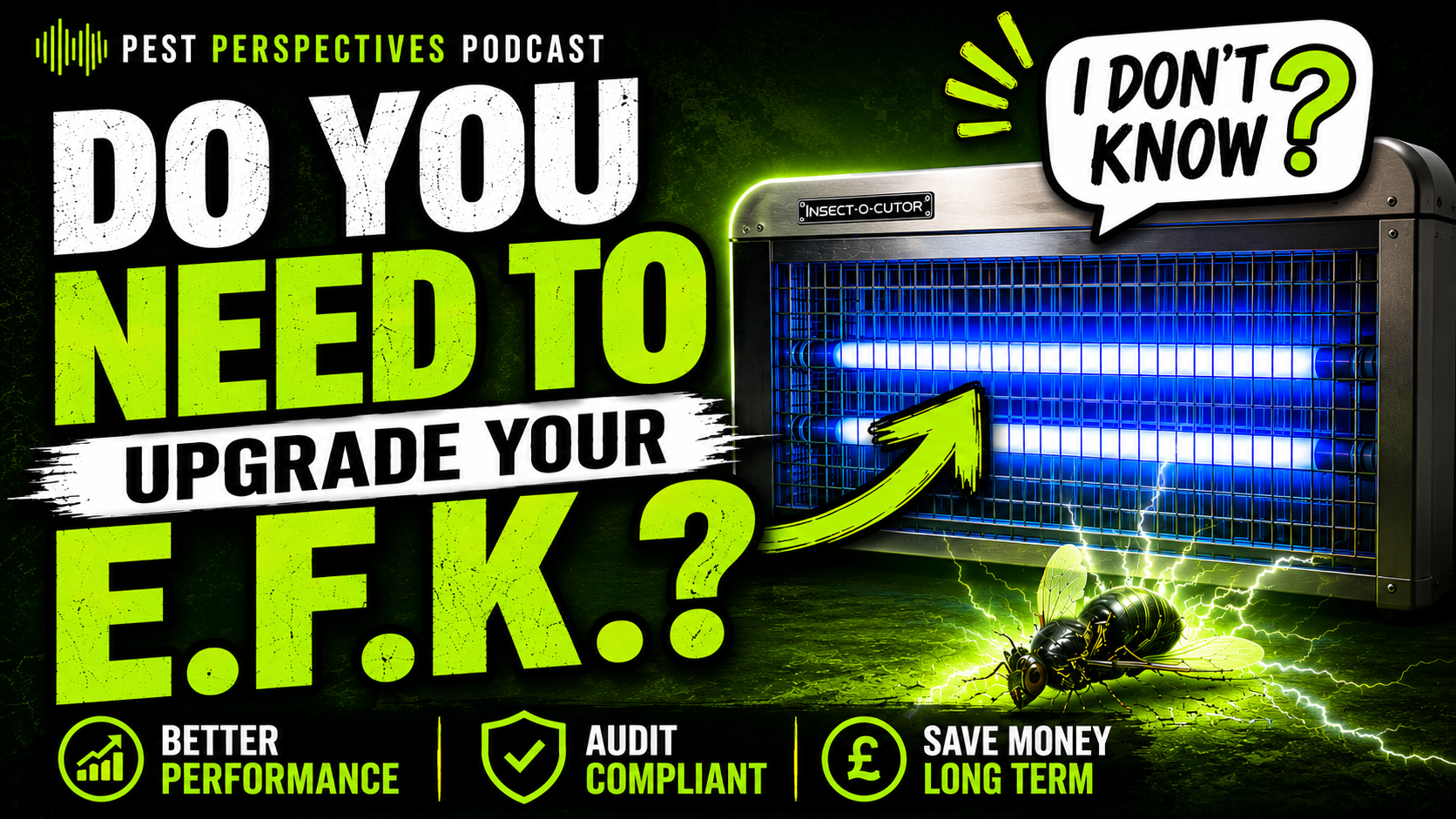
EFK Fluorescent Tube Update for Pest Management: What You Need to Know
Introduction
If you’re running a pest control business or working as a technician in the UK, you’ve likely encountered electric fly killers (EFKs) on countless jobs. They’re a staple of commercial pest management—especially in food handling environments, hospitality venues, and any facility where flying insect control is non-negotiable.
But here’s the thing: the equipment and standards around EFK servicing are evolving, and staying on top of these changes isn’t just about best practice—it’s about compliance, client confidence, and protecting your reputation.
In a recent episode of the Pest Perspectives Podcast, host Shaun Muller spoke with Jasmin Emmerson from Opti-Catch & Fotolec Technologies Ltd to discuss the latest updates affecting EFK fluorescent tubes, UV lighting systems, and what pest professionals need to know going forward.
This conversation is essential listening for anyone involved in commercial pest management, audit-ready sites, or regular EFK maintenance work. Let’s break down the key takeaways.
Why EFK Updates Matter to Your Business
Electric fly killers aren’t just a nice-to-have on commercial sites—they’re often a requirement. Many food businesses, restaurants, care facilities, and manufacturing plants operate under strict pest management protocols. Audits, food safety certifications, and regulatory compliance all hinge on effective, well-maintained fly control equipment.
That’s why changes to EFK standards and fluorescent tube specifications can have real implications for your business:
- Compliance risk: Outdated or non-compliant equipment could affect your clients’ audit results
- Service planning: New standards may require changes to your servicing intervals or procedures
- Equipment investment: Understanding what’s changing helps you plan capital expenditure and stock management
- Client communication: Being informed allows you to advise clients confidently about their fly control setup
Jasmin’s expertise in this area is invaluable because these changes don’t always filter down to technicians quickly. By understanding the “why” behind the updates, you can position yourself as a knowledgeable, proactive partner to your clients rather than someone simply replacing tubes on schedule.
The Key Changes: EFK Fluorescent Tubes and UV Standards
While the specifics of regulatory changes can be technical, the core issue centres on the performance and specification of fluorescent tubes used in EFK units. These tubes are the heart of the equipment—they emit the UV light that attracts flying insects into the trap, where they’re either electrocuted or captured.
The industry is moving toward more standardized, higher-performance specifications. This means:
Improved efficacy: Newer tubes are designed to be more effective at attracting target insects, which translates to better fly control for your clients.
Consistency across equipment: Standardized specifications help ensure that EFK units perform predictably, regardless of the manufacturer or age of the unit.
Compliance alignment: Updates often align with food safety standards, environmental regulations, and industry best practices—particularly important for audited sites.
Long-term sustainability: Better specifications can mean more reliable equipment and clearer guidance on replacement intervals.
For technicians, this means understanding which tubes are appropriate for which units, knowing when replacement is due, and being able to explain to clients why these updates matter.
Practical Implications for EFK Servicing
So what does this mean when you’re out on the job? Jasmin’s conversation with Shaun covers the practical side of these changes:
Service Scheduling and Intervals
Understanding the new standards helps you determine appropriate servicing intervals. Some clients may need more frequent servicing depending on their environment (high-traffic food areas, for example). Being able to justify this based on industry standards—rather than just “best practice”—strengthens your client relationships.
Stock Management and Planning
If you maintain inventory of EFK tubes and replacement parts, understanding what’s changing helps you avoid being left with obsolete stock. It also ensures you’re always equipped with compliant, current products.
Equipment Recommendations
When clients ask whether they need to upgrade their existing EFK units, you’ll be better positioned to give informed advice. Some existing equipment may be perfectly serviceable with updated tubes; other units may benefit from replacement.
Documentation and Audit-Ready Records
Commercial clients increasingly need detailed records of pest management activities. Being able to document that you’re using compliant, current-specification tubes strengthens their audit position—and yours.
Staying Compliant and Audit-Ready
For pest control professionals working with audited sites—food manufacturing, hospitality, healthcare, and retail—compliance is everything. Clients depend on you to keep their pest management systems current and effective.
The conversation between Shaun and Jasmin emphasizes that these EFK updates aren’t arbitrary. They’re driven by:
- Food safety standards (HACCP, BRC, and similar protocols)
- Environmental regulations (around equipment disposal and energy efficiency)
- Industry consensus on what constitutes effective fly control
- Client expectations and audit requirements
By staying informed about these changes, you’re not just ticking boxes—you’re providing genuine value. You’re helping clients maintain compliance, avoid audit failures, and ensure their pest management systems are genuinely effective.
What Pest Professionals Need to Do Now
Based on the episode discussion, here are the practical steps you should consider:
-
Review your current EFK stock and equipment: Do you know the specification of tubes you’re currently using? Are they aligned with current standards?
-
Check with your suppliers: Reach out to equipment suppliers and manufacturers. Ask what’s changing and when. Get clear guidance on which products are compliant.
-
Update your service documentation: Ensure your service records clearly document tube types, replacement dates, and specifications. This matters for your clients’ audits.
-
Educate your team: If you run a team, make sure everyone understands the changes and why they matter. This isn’t just technical knowledge—it’s about delivering professional, compliant service.
-
Communicate with clients: Don’t wait for them to ask. Proactively explain what’s changing, why it’s important, and what it means for their pest management setup.
The Bigger Picture: Industry Evolution
What’s interesting about this conversation is that it reflects a broader trend in pest management: the industry is becoming more standardized, more regulated, and more professional. That’s good news for established, knowledgeable operators.
Clients increasingly expect pest control professionals to be experts—not just people who show up and spray. They want to understand your approach, your compliance standards, and how you’re protecting their business. Staying informed about updates like EFK specifications helps you deliver on that expectation.
Final Thoughts
EFK fluorescent tube updates might sound like a niche topic, but for commercial pest control professionals, it’s genuinely important. It affects your compliance obligations, your service planning, your client relationships, and your business reputation.
The conversation between Shaun and Jasmin provides exactly the kind of practical, expert insight that helps you navigate these changes confidently.
Listen to the Full Episode
Want to dive deeper into EFK updates, UV tube specifications, and what it all means for your pest control business? Listen to the full episode of Pest Perspectives Podcast featuring Jasmin Emmerson from Opti-Catch & Fotolec Technologies Ltd.
You’ll get the detailed technical breakdown, practical servicing tips, and expert guidance on planning your EFK maintenance and compliance going forward.
Subscribe to Pest Perspectives Podcast for weekly episodes covering rodent control, drainage investigations, wildlife management, integrated pest management, and essential business compliance topics for UK pest professionals.
Pest Perspectives is hosted by Shaun Muller of Oakham Pest Control Ltd. Each episode features practical conversations with technicians, business owners, suppliers, and industry experts. New episodes drop weekly.