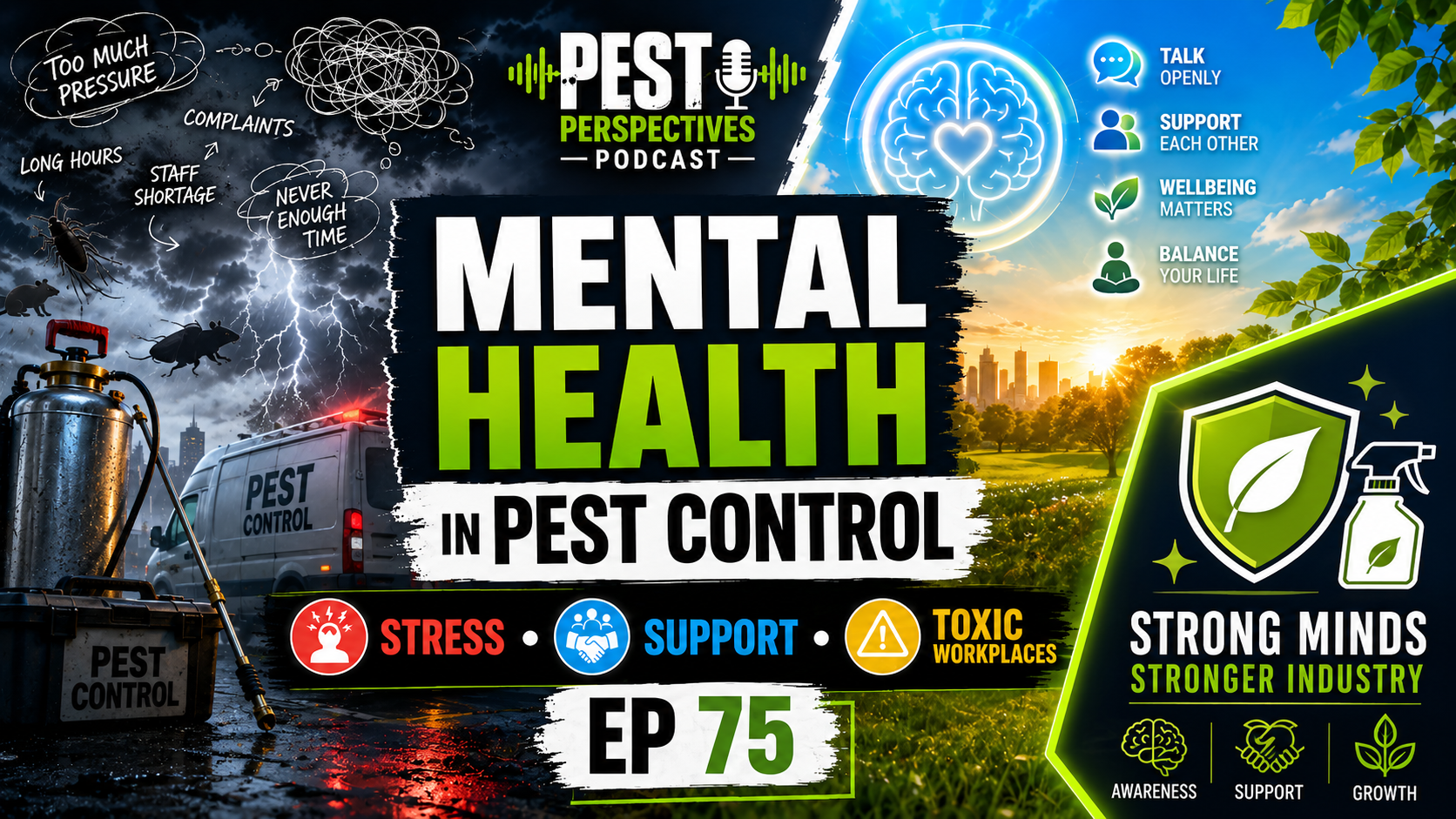
Mental Health in Pest Control: Stress, Burnout & Support
The Conversation We Need to Have
If you’ve been in the pest control industry for any length of time, you know it’s demanding. Long hours, unpredictable call-outs, working alone in unfamiliar environments, and the constant pressure to deliver results. But there’s one aspect of running a pest control business that rarely gets discussed openly: the mental health and wellbeing of the people doing the work.
That’s exactly why Episode 75 of Pest Perspectives exists.
Shaun Muller sat down with Mark Coltman, founder of Mindsafe Coaching and owner of Evolution Pest Control, for an honest, no-nonsense conversation about mental health, workplace pressure, and the realities of running a service-based business. It’s not your typical pest control podcast episode—and that’s precisely why it matters.
Mark’s Journey: From Crisis to Calling
Mark’s path to becoming a workplace mental health advocate wasn’t straightforward. His career has spanned defence equipment testing, sales, pest control technician work, and business ownership. But it was his experiences within the pest control industry itself—and a personal crisis—that fundamentally changed his perspective.
Like many business owners, Mark faced the devastating impact of the COVID-19 pandemic. Losing much of his business during lockdown forced him to confront difficult questions about his own wellbeing and that of his team. Rather than simply moving forward, he made a brave decision: to retrain in mental health awareness and establish Mindsafe Coaching.
His story is a reminder that sometimes the most valuable expertise comes from lived experience. Mark isn’t speaking theoretically about burnout and workplace stress—he’s lived it, survived it, and now helps others navigate it.
The Three Levels: Understanding Mental Health Properly
One of the most valuable insights Mark shares is the distinction between three different states:
Positive mental health is where we want people to be. It’s not the absence of stress—it’s the presence of resilience, engagement, and the ability to cope with life’s demands.
Mental ill health sits in the middle. This is where someone is struggling but not yet in crisis. They might be managing, but they’re not thriving. This is the critical intervention point.
Mental health crisis is the emergency state—when someone is no longer able to function.
The problem? Many businesses wait until employees reach crisis point before offering support. By then, the damage is often significant—both to the individual and to the business.
Presenteeism: The Silent Productivity Killer
Here’s a term that doesn’t get enough attention in pest control: presenteeism.
It’s different from absenteeism. An employee with presenteeism shows up to work—they’re physically present. But they’re not functioning at their normal level. Stress, anxiety, personal pressures, or mental health struggles mean they’re operating at reduced capacity.
In pest control, this is particularly dangerous.
When a technician is driving to multiple jobs across a region, they need full concentration. When they’re working alone on a treatment, they need to be sharp and focused. When they’re handling professional-grade pest control products, they need to be alert and safety-conscious. Presenteeism undermines all of this.
The impact extends beyond individual safety:
- Productivity suffers. A technician who’s mentally struggling takes longer to complete jobs, may miss details, or might need to revisit sites.
- Communication breaks down. Stressed employees are less likely to report issues, ask for help, or flag problems early.
- Decision-making deteriorates. Quality of work declines when someone’s cognitive function is compromised.
- Safety becomes a risk. In an industry involving vehicles, chemicals, and working alone, a lapse in attention can have serious consequences.
Recognising the Warning Signs
So how do you know if someone in your team is struggling?
Mark and Shaun discuss the importance of recognising early warning signs. These might include:
- Changes in behaviour or communication patterns
- Increased irritability or withdrawal
- Decline in work quality or attention to detail
- More frequent absences or lateness
- Seeming overwhelmed by routine tasks
- Changes in appearance or personal care
The key is that these signs often appear before someone reaches crisis point. If you’re paying attention, there’s usually a window where intervention and support can make a real difference.
Understanding Stress “Spikes” and Recovery
Another critical insight: stress isn’t constant, and neither should our response to it be.
In pest control, there are naturally stressful periods—seasonal surges, difficult clients, challenging infestations, staffing issues. These create stress “spikes.” The problem isn’t the spike itself; it’s what happens after.
Recovery is essential. If someone experiences a stress spike but then has time and support to recover, they’ll bounce back. But if spike follows spike without recovery time, that’s when burnout develops.
This has real implications for how you manage workload, scheduling, and team support. Are you building in recovery time? Are you recognising when someone’s had a particularly tough week and adjusting expectations accordingly?
Management’s Role in Workplace Mental Health
Here’s an uncomfortable truth: poor management directly impacts employee mental health.
Unclear expectations, lack of communication, feeling unsupported, or working in a toxic culture—these aren’t just morale issues. They’re mental health issues. And they’re largely within a business owner’s control.
Creating a safer workplace means:
- Being clear about expectations and deadlines
- Communicating openly and regularly
- Showing genuine interest in your team’s wellbeing
- Responding to concerns seriously, not dismissively
- Modelling healthy boundaries around work
- Making it safe for people to speak up about struggles
The Bottom Line
Building a safer, healthier workplace isn’t about grand gestures or expensive wellness programs. It’s about creating a culture where people feel safe enough to be honest, where mental health is discussed openly, and where support is offered before crisis hits.
For pest control business owners and managers, this is both a moral imperative and a business imperative. Your team’s mental health directly affects safety, productivity, quality, and retention.
Ready to Dive Deeper?
This episode covers so much more—from practical strategies for supporting struggling employees to the specific challenges of the pest control industry. Mark shares candid insights about his own journey, and Shaun brings his characteristic practical focus to the conversation.
Listen to Episode 75 now to hear the full discussion with Mark Coltman. Whether you’re a technician wanting to understand your own stress better, or a business owner building a healthier workplace culture, this episode is essential listening.
Because in pest control, we talk about protecting properties and managing infestations. But we don’t talk enough about protecting the people who do the work.
It’s time to change that.