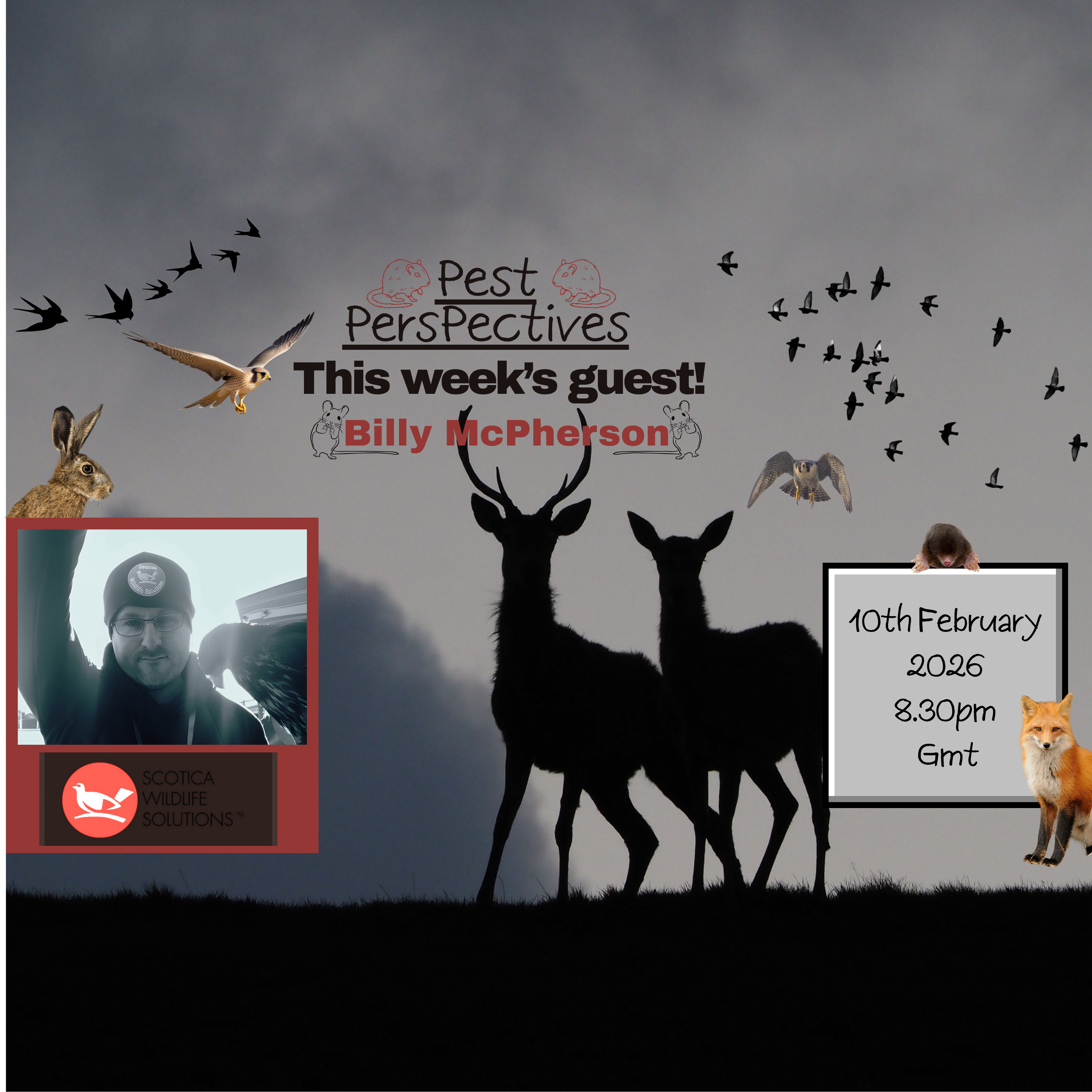
Wildlife & Bird Control: Falconry, Rabbit Control & Commercial Pest Management | Billy McPhearson
Tonight's Episode
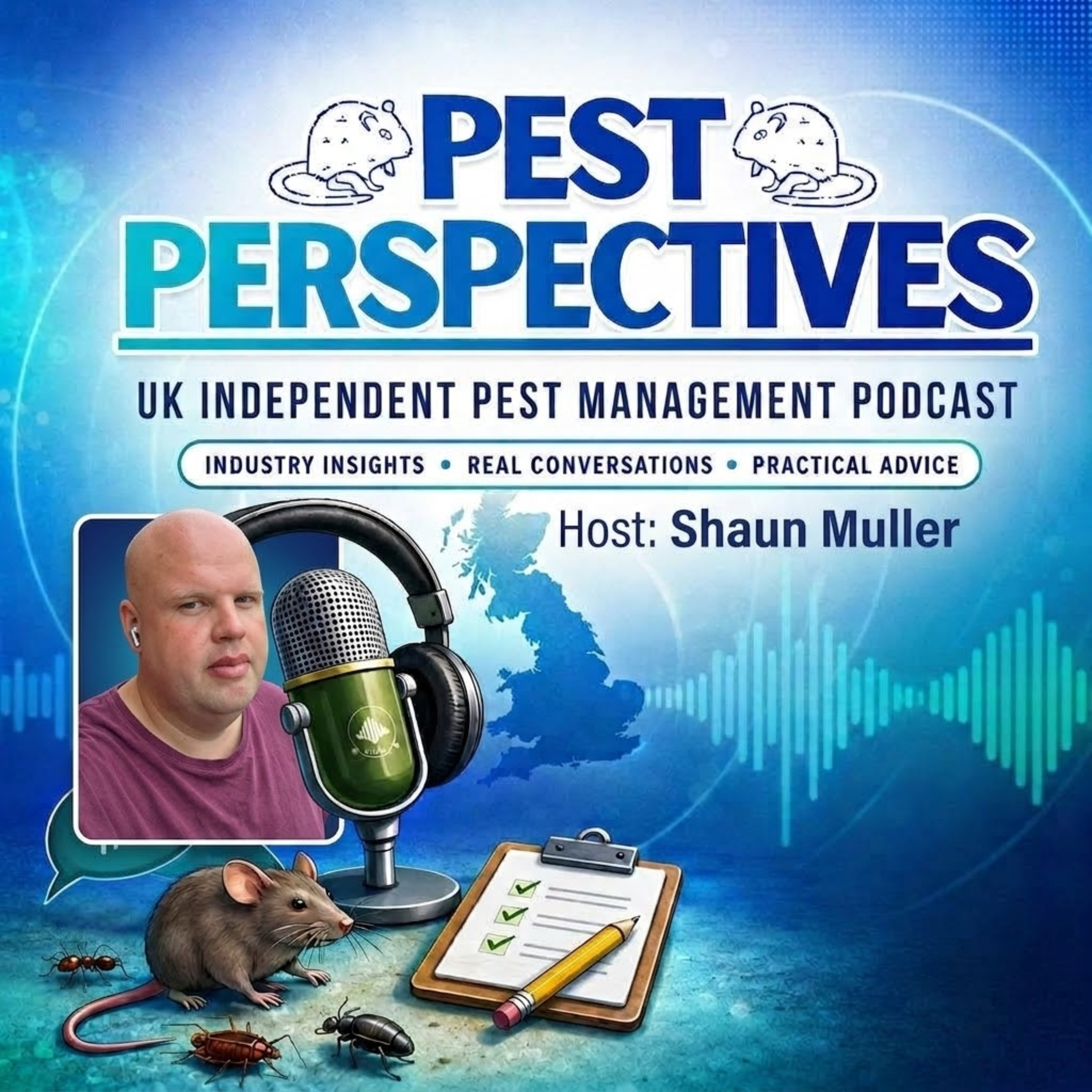
Wildlife & Bird Control: Falconry, Rabbit Control & Commercial Pest Management | Billy McPhearsonIn this episode of the Pest Perspectives Podcast, Shaun sits down with Billy McPhearson of Scotica Wildlife Solutions to talk about the realities of wildlife management, working in challenging environments, and the practical skills needed to deal with problem species safely and professionally.Billy shares insights from his day-to-day work, the types of jobs he attends, and how wildlife control differs from standard pest management. The conversation covers field experience, training, industry standards, and the importance of doing the job correctly and ethically.This episode offers valuable learning points for pest professionals, wildlife controllers, and anyone interested in the practical side of UK pest and wildlife management.A practical, honest conversation from the field with one of the industry’s working wildlife specialists.🎧 Listen now on your favourite platform📚 CPD value: Reflective learning opportunity for pest professionals
Hello and welcome to Pest Perspectives episode and #53 I am live and direct on a Tuesday night. I have on this week Billy McPherson from Scottiga Wildlife Solutions. Did I mess it up that time? Yeah, I said it perfect before the show. You were perfect before. You just called this Scott Eager. Yeah, it's fine. It's fine. Scotaga. Scotaga, is that it? Scottiga. Scottiga. That's what I called it before then. I usually mess it up live on the air. I do. I do. So how? How are you doing? I'm fine, I'm fine.
It's been a long day, but good day, not too bad. The weather is horrific. Don't know if you can hear the rain in the background. Hammer in my Conservatory roof, so yeah. I can hear it slightly. Welcome to Jason from Ask Pest Control. Thanks for popping in, as always.
So tell people if they don't know who you are, what you do and who you are. But we'll get into it more in a bit. But yeah, yeah. Billy MacPherson Scott A car at Wildlife Solutions. I have been in business since 2010 and prior to that I worked for a couple of large nationals and another pest control company, mostly focusing on specialist birth control and wildlife management. But now, now we offer everything
routine pest control, mostly commercial, very little, very little domestic. But the, the main, the the business now as bird control and target falconry, bird control, some wildlife management and commercial pest control.
I think it came in industry in 2004 I think it was cut my teeth through one of the big nationals in a city centre which was an eye opener and went on to fly Hawks for a smaller outfit. After leaving there and then we myself and one of my colleagues there were asked to go and join another large national for the sole purpose of carrying out a big game rabbit control contract for a a very large oil company in the UK. And the job had been sold prior for hell of a lot of money. And I hadn't gone with under the under the national companies and we're working.
So they basically employed us to carry out this contract and see it through, which I think took about four years. And when we weren't on the contract, we were doing specialist wear life stuff. And I later went on when the wildlife stuff kind of dried up, I went on to fly Hawks for this national and before going self-employed. So that's kind of my background. That's a kind of short version in the background and myself. Yeah, no, that's. Oh, yes, that must have been a serious infestation. Yeah, yeah, yeah.
It was, it was colossal. It was up in the Shetland Dales for a on a on a massive, massive oil terminal which had had rabbit issues going back 60 years when we're no no proper control. And it was getting to the stage where the infrastructure of the terminal, but I'm sure at the time, I don't, I don't know about now. I'm sure that the time was responsible for something like 15% of EU KS oil supply was was being damaged by rabbit damage. So they had no, there was no natural predator. Sorry, that's not that's not entirely true.
They had very limited natural predators on scale. And I think the done thing back in the day was an old guy, local guy used to come and wear a shotgun. But OK, when when you're responsible for 15% of the nation's oil and old guys for the village, coming in with a shotgun was certainly be that's allowed. So they they brought in the large national and they really never went well at all. So we went and then gave them a proposal and then spent roughly, but I think it was maybe 2 visits a year, but we'd be out there for a few weeks at a time just calling, calling rabbits at night where air rifles.
But the health and safety as you can imagine on a top tier Royal terminal was ridiculous. Oh yeah, there was a lot of kickback to begin with, but even shooting on the site we had to justify it to the right people. It was only, it was only really okayed in the end. The initial, the initial control method was going to be gassing before we got involved. And the technicians for the company turned up to carry out this gassing, which would have been a colossal job in itself. And they discovered that there was no Burrows.
The rabbits were living above ground because they had no predators, no site survey the. Well, yeah, so on, on, on our first visit, first ever visit, we turned up on a night shift where in Eagle and we were handed three massive cardboard boxes fully for stocks and gas. There must have been about 3000 cans of gas and these boxes and they're like they're yours, take them away, that's another story. But yeah, it went well after that. We but it only really went ahead because one of the guys on site, I think he was the pyramid manager at the time.
Pete was, was himself a shooting man, so he could understand the jargon we're talking about with regards to rifles and calibres and pellets and you know, air bottles and things like that. I think if it hadn't been for Pete's involvement, and I'm understanding that, it probably wouldn't have went ahead. And then Pete joined us for the 40 years that we were on site. Night Shift had a great time. So I think, I think at the height of it, when we first started, we were probably removing about 900 rabbits a week.
Yeah, it was. It was colossal. And towards the end when we're starting to slow down, I think what we're seeing two and three hundreds then in the week. But I mean, I'm a, I'm a kind of born and bred shooting man. And towards the end, you know, it was, there was no enjoyment and it was an absolute slot of it was a huge cull. You know, the rabbits had No Fear of humans whatsoever because they have never haunted properly I suppose for their entire existence really on that plant. There was something like 50 miles worthy roads on this plant, to kind of put in perspective.
It was massive. And there are still probably parts of the plant that we never got to. And so you would there would be a spot on in the driver in the front of the car, the marksman shooter in the back. And you, you, you would pull up to a group of 20 rabbits, for example, and you would shoot all 20 of them because they didn't have the, the they were showing. It was so ingrained in them that humans didn't result in fear, you know? So you would call 20 rabbits. And I sat in there. Usually we have under normal circumstances, anywhere else, you'd be lucky.
You should do. And the rest would run away, you know? So it was an absolute, Yeah, that's what needed to happen. I don't know what the site's like. No, the site's still operational, I believe, but I don't think it does half as much as I did back in the day the way the oil industry and stuff is. But. Yeah. It was one of the, it was one of the more interesting jobs that I've done in my career and it was definitely the catalyst for me getting involved in proper professional kind of wildlife management.
So. That's a good story, Jason. I just had a chat. Can you hear any when I talk? Can you hear a reverberation? Can you hear it? No, I just wanted to. I just wanted to have a chat. Can hear it because I can hear it in my headphones. It might just be my headphones. It might. Same. Thing to me. Yeah, sure, Jason would tell me if you can hear it, but you see me headphones, I can hear a little bit of It's probably nothing, but yeah, it's sad rug of fucking me this but now. So that was the catalyst for wildlife management.
Yeah, yeah, yeah. Well, I've done a fair sense before that. I mean, I grew up like a lot of the guys. And then there's the hunting fashion shooting and my younger days when I was a teenager, my, my, my weekends were spent sneering rabbits and catching monk and squirrels and all sorts. So I had to feel a good grounding, even compared to a lot of the guys who are met and pest control, you know, wide life management and, and professional, especially commercial pest control is still a very, very limited kind of field out there, guys who are quite capable.
Let's just say everyone seems to have done a bit, if that makes sense. Yeah. But, you know, very in the grand scheme of things, very little. Yeah, that doesn't. God, God, that thing is annoying me. I've tried to fix it. All right, Jason said it's just a tiny bit, but so. So what initially got you into pest management in the 1st place? When did you apply? Apply to be a be a technician somewhere? Is that? Yeah, yeah, yeah. Did it look like a good job? Yeah. It sounded like a good job. It's something that had been on my mind.
I was working in a call centre at the time selling car insurance which which was just awful. That was the worst job ever. And before that I had worked, I had worked in a parts department and a car garage, which again was just my numbing. And I had seen I had seen an advert, one of the nationals advertising for a pest control technician in Edinburgh city centre. And I don't think I even sent ACV and I think I I think a little literally a letter of introduction on an E4 piece of paper. OK. And centre and and I got an interview Fortnite later and and of you went well, they were they were looking for someone who had an animal management kind of focused mind, which I'd done in my hobbies at the time, hunting, shooting session, a bit of trapping.
That's exactly what they were after. In fact, the chap who I'm not going to say his name, but the chap who first employed me in that initial role was the same chap who ended up jumping ship and Ted hunt, he does to go and do the big rabbit cull. Oh nice. So yeah, it definitely seems something on us and I believe he's, I believe he's a top tier director now from the company that works for us. So not seen him for a long time. But yeah, so I got, I got offered that job and I think that's where once I had been, I was in the door a few weeks and then became apparent to me that I had an idea in my head what commercial pest control was compared to what it actually is.
You know, it was a bit of, it was a bit of an eye opener. Box kicking, yeah. Yeah, yeah, yeah, yeah. And, and, and, and not just that, you know, just how how commercial pest control works, you know, it's extremely sales focused and that that was a shock for me. And I expected most of the technicians who worked for this company to be really expert. Let him. So what I'm looking for expert examples of myself, guys who had a bit of experience growing up 150 shooting. And that wasn't the case at all.
And it probably still isn't the case where a lot of these bigger companies, I'm not going to get controversial, but I mean, they do have them. I think I think a lot of the best technicians come for the same kind of background. A lot of good technicians don't. But I think it helps. And you know, I think technicians at that company and subsequent companies that I've had dealings with, I have technicians that have been in the industry 20 years, you know,
and knowing what I know now, I still wouldn't trust me solve a remotely difficult rat or a mouse issue. You know, I think we're just one of those industries that I don't know because so much it has pest control focused and so much it is sales focused, non pest control, non pest controllers can exist in this industry fairly easy, if that makes sense. Yeah, I mean, obviously I do press control and my commercial stuff, I'm not the best to sell us. So I just, you know, I, I Ioffer them what we've got and I'm not the best at selling.
But imagine the place you came from. They wanted you to be amazing sellers. They did. 100%, yeah, yeah, yeah. And that, that that's still the case. I mean, I've got friends who are colleagues in, in the national, in the big nationals and nothing's changed. You know, if if anything has got worse and what one of them actually jokes that, you know, we're not actually a pest control company. What a sales company who does pest control, you know, and there's a lot of truth in that. That's something I actually said when I first started and it was, and it was basically kind of prevalent for what I was doing because I was city centre based, you know, there was a lot in national accounts there.
There was a lot of close knit, you know, take together customers with all different shapes and sizes. And it was, it was really interesting to see the approach that the company had to deal with them. Customer service if you like you back with us. No, it's not working.
Hello there. You're back. Here we go. Has that fixed it? Hello it. Sounded all right to me in the 1st place. I don't know about everyone the. Name master. I'm just saying that I don't know why no, I can't really hear that, but whatever it was now so it it when I was I thought I'll unplug it and I'll plug it back in. Actually just seen, you know, laugh. The microphone fell off in my hand. I'm holding it like a mic now. But no, you are right. So you kind of mean that sometimes companies take on people that ain't really got the skills, but they're just willing to go and open boxes and just take it.
That's it. Not problem solvers as such. 100% and, and it could be argued, and it has been argued before that I mean, there's a place for those guys as well. You know, it's not an argument I agree with. But you know, I think when when I was on the podcast was showing many that we talked before we came on, that was something that we discussed that usually in any business, you get two types of technician. You get your book checkers and you get your killers. And I don't know if it was Sean or Alex says, you know, both of them have their place, which I don't really totally agree with that.
I think a box shaker should be able to tell you out with a box that if there's a possible pest issue, you know, which killers 100% because they're looking, they're looking out for that, you know, And I especially think whether incoming AI, which is probably going to change all industries, including ours. It's my personal feelings that if you're a box checker and an industry at the moment, you're probably not going to be in a job for very long the way AI is coming in, you know? Because you know, if you're left in a box to fill in APDA or a paper or paperwork, it's going to be a thing in the past, you know?
I mean to to a degree, but a lot of these systems, oh, it's back again, don't matter. A lot of these systems, so say you're doing commercial premises, they will only get that kind of technology, the high end because these systems are not deep. Yeah, there's an expensive systems. I've trialled one that wasn't the greatest fan of it, but I tried it. But it's the. Cost factors involved. I don't think the technology is quite there yet either, especially for it's not quite the technology probably exists.
Yeah. And but it's not available. Certainly any of the systems that I've seen do not do what I would want to do before I invested in it. And like you say, when when everything comes fresh on any market tech wise, it's always very expensive. Yes, I mean, I use I use AI for to help me. I mean I'm not the best at writing etcetera. It makes me makes my pest control reports on what I say sound a lot better. OK, that's cheating, but everyone's doing it. It's it makes it sound better because I'm not, I'm not the best at writing.
I'm. Not it's not. It's not cheating at all. You're using a tool which is available to you to make your service more professional. You know it's not. If anything, you'd be cheating yourself by not doing that. You know, be. Fair, the app I use to do it has just introduced AI as well, so you can't use it as well. Yeah, it's only in the sense of writing your report. You got to tell it what you want to say and I just go rewrite and it rewrites it more professional. Yeah, yeah, I use, I use shown mini software for my report writing.
Oh, nice. And, and obviously it's completely designed to be adapted to your own business. It's got a memory bank. I've trialled it. I think that's that's incredible, that memory bank. It really is, but I mean, I've introduced a lot of my own stuff on there, which is specific to my, the type of work I do with my clients and even even my clients individual sites, you know, and I've used AI to help me with that. You know, give me for an example being, you know, create me 20 bullet points to be included on an environmental risk assessment for that waste management site.
You know, it's fantastic for that. And then you just adapt it to what you need. You know, you're. Definitely right, because I don't know if a lot of a lot of my listeners have noticed that if you see it says best perspectives and AI insights, the fact that's what the podcast is called. But the reason that's there is AI picks it up better because I do, I do talk a lot about AI as well, but AI, it's in there for AI picks it up better. But I think you talk about AI not every episode, but it is an important tool.
Oh, yeah, If you learn how to use it correctly because like, it's a good, it's a learning curve. You've got to get. Yeah, yeah, understand. The way you write it does make mistakes, so you've got to proofread it as well, 100. Percent, yeah, yeah, yeah. But I mean, it's only going to get better, you know? Yeah. It's only going to get better and it's only going to get more useful. And when when this technology comes, which inevitably well keep going back to making an original point, your, your box checkers and my view will be defunct.
You know, I can I can genuinely see a time maybe in the next 10 to 20 years where and maybe does cost jobs on, you know, within the big national companies, a lot of them probably are quite top heavy just to have coverage in certain areas. You know, and I'm not going to get make it a bit controversial. You know, they promised their customers that someone's going to turn up within 24 hours their call or a 12 hours maybe even. Yeah. As far as the customer's concerned, that person turning up to pest control expert.
Yeah. That and, and by the way, I was that guy as well at one point, you know, when I took that job in Edinburgh city centre, I was getting call outs for things that I had never heard and you you were walking in his face with customers who were anxious expected answers, you know, so I'm not criticising but that happens a lot still happens a lot.
So I think there's going to be big changes. AI is going to completely change that. I think, I think, I think severe. I could be wrong here and somebody might jump on and tell me I'm wrong. But already surveyors who work for one of the big nationals have a tablet. And for example, if they go a Sean says for a bed bug infestation and only two days in the door, they literally press the button on domestic bed bug job. And it gives them all the questions to ask, all the solutions to offer, and all the places they're in front of them.
And all they do is but but but but. I can believe that, yeah. Produce a quote and away so they sound like experts when they're talking. It's all there because it's all there. And that even that side of AI will probably come into it if it's not already into it for the technician as well. So the only difference then is going to be between the guys who have got the tablet, the book, you know, the box checking, and the guys who have got field experience, you know? Exactly. Yeah, because. Because we're starting to, we're starting to explore into got a drain camera now going on David Brown's course on Thursday.
We. Started to play with that and offer that soon. You'll enjoy that. I've done David Brown's course a couple of years ago and it's and obviously Sean does a fair bit with with drainage as. Well, he does. He talked about it on the other week. Yeah, that Sean came on, didn't they? I think it was episode 50. Yeah. That's not really the influencer, is that right? The influencer, Sean Mooney. Yeah, yeah. Called, called himself that. I'm just repeating what you what you told me.
But no, it's no, we're doing that. But that's more problem solving. Hope, hopefully. But you've got to try these things, aren't you? No, no, and definitely if it's another string to your ball which you can offer your clients, it kind of frighten the life for me, to be honest. Drainage is like a little industry, and all in its own. It is, yeah. And and like like our industry and seems to be know everyone's doing it very well. I thought about it and I actually thought about setting a guy up to do a drainage on my behalf, you know, as part of the company.
But you're almost and showing any problem. Disagree with me here mostly, but you're almost borderline going to property maintenance with that kind of thing when you need to start doing dig ups and repairs and stuff. It's always telling your client that they've got rock activity because they are breaking their drain, but they then want you to fix it and repair it and it to be off stand up and things. You can't do because Sean does it. You can offer. So say you've got a crack. Yeah, you can offer the patch lining, which doesn't require a Dick.
I don't think Sean does Dicks. I think. I think you get someone else in when it's that kind of level. But not not all of them will require a Dick. Yeah, yeah, my, my brother's a drainage contractor, a drainage technician for local authority here. Does he believe that? Does he believe that rats live in the silver? Yeah, only only because I've told them. Yeah, I've heard a lot of them, basically. But yeah, if, if, if it's something that you do and get good at, I mean, what, what an income stream, you know, just.
Have to see how it goes, try these things and we're seeing that happens. I speak to to local pest controllers up here who I'm friendly with and the number of times where we could really use a good drainage guy to come up and camera a job and normally camera the job affects it because we know that it's a drainage issue. You know, 9 times that you attend, that's not hard to tell. But where the drainage issue is and how we fix that, there's two different things. And I'm not, I don't want to buff David Brown's bubble because you'll hear about all this when you run his course.
But a lot of the drainage companies just probably bounce it back to you. You know, they want, they want the quick camera money. They didn't want their heartfelt. They haven't effects that appear so 9 times. Every time they tell, they tell the client that there's nothing wrong with their veins. Yeah, because he even mentioned it on the, I can't remember because I went to Kill Germ workshop last year and he's doing talk there and that's what made us want to do his course. And he said what they don't tell people is that your drains are fine, but what they should say is our drains are fine.
I don't know about your private drains, but they don't say that, do they? And they think their trains have been surveyed when they haven't. Yeah, yeah. They just said we only do our drains. Your private trains? I have no idea, but don't convey it the right way, do they? Yeah, absolutely. Absolutely. Again, one thing, one thing he did say though, he done a survey of I don't know which water board it was and he was writing down notes from each. A certain survey over a period of years with a water company, I don't know which one.
And they found that 99% of the fault, 9090% roughly, were actually always in the private drain and not the water companies drain. Yeah. It was. Yeah, I can believe that. I can believe that because I mean, I mean the private dreams of where all the movement is going to be, you know, people lifting in lane drives and building, you know, extensions and all sorts, you know. So yes, I could believe that. No problem. You'll enjoy that great course. I will I'll let you know what I think of it. I will definitely wildlife management.
What does it involve? That's test if people, if someone wants to get into wildlife management because there are people out there that not everyone wants to do normal pest control because like I've got a friend who does a lot of farms. He just and he does like, you know, uses his dogs, he's got shoots, etcetera. He loves it. But what kind of things do people need to think about what when, when doing it? Because it's not just a case of just going and shooting. You can't have a plan that everything you.
Have, yeah, yeah, absolutely. It's like everything else in pest management. It's so diverse. Wildlife management, It can be from mole control and a domestic garden in the middle, middle of town centre. They're a large scale mole control and a country state or a farm over hundreds of thousands of acres. And it can be from Rd Deer Management, Red Deer Management, the six species they did in the UK, all which all which have no natural predators and need to be managed by mine.
It's so diverse and people who usually do it professionally and commercially usually have some kind of background in it, I think. I don't, in fact, I don't know anyone who's king, who's got into, for example, deer management. You know, it's probably one of the most complicated aspects in wildlife management that there is in the UK with regards to legislation and equipment, you know, and the laws are different in England and then they're in Scotland and Wales, Ireland and stuff. You you you really most people come in and or and often as a professional paid service because a lot a lot of recreational shooters offer deer management as well for land owners and people would need that We have the pet management industry would come in would be for you know, your large clients such as like, you know, like network real and you know, large land National Trust, National Trust, but big outfits like that.
But yeah, 9 times out of 10 people would have a hunt and shooting background if someone who was already in the industry fans could get involved in it. The only really thing that I would recommend as the really put some time, money and effort and to go nowhere professional doesn't need to be a pest professional. It could be a, you know, a stalker on a, on a, on a large estate somewhere or even anyone who offers recreational stalking. You will learn so much of these guys rather than a classroom saying that you get your deal management qualifications now 1-2 and three I believe.
I think 3 is relatively new, which teaches all about field craft to equipment and meet Hanlon. Because obviously tea and meat is a commodity. It's an asset. It's not just be disposed of you. It usually enters the food chain. So you've got that side of it. It really is. And again, deer management's just a very small part of it. And the probably the most common thing that your your routine best controllers would get involved in and wildlife management wise would maybe be up in foxes, rabbit control squirrels.
And most people have probably dealt with squirrels. If, if people have got a method, they're dispatching foxes or know someone who can dispatch foxes from them, they may offer fox trapping, life catch, cage trapping, offshooting, if the area, if the area allows it. So yeah, it's, it's so diverse. Probably everyone in the pest control industry, even even if they don't have anywhere life management experience themselves, they probably know or have met someone at an industry event or something that does.
So I would probably, I would probably encourage them to even just to get a better understanding of it, see if they're not going to offer it. It's all I mean the, the shoe and the shoe on the other, the other foot. I don't do a lot of insect stuff at all. You know, it doesn't interest me. I didn't know a lot about it. So so I usually don't offer it. I would usually buy. You're just like Andrew McDonald's. I mean, she take the tanks. I don't know if you know him. Yeah, yeah, yeah, yeah. He just, he just wildlife management like, so yeah, he doesn't really do insects.
Yeah, yeah, yeah. If, if it's no bird related or like pest control, you know, like routine pest control. We do do a lot of rodents. We do a lot of waste minds for blood and pest control. But insects, I just, I find that boring, to be honest, I'm not going to lie. And but I do like talking to these guys and the guys and stuff because, you know, it's something I didn't know about that I probably should, you know, even just more for people. And people are asking me advice, you know, I should know where to send them.
Why you don't if you don't get any calls for it and it's not your buildings? Because they always say pest. Pest management is an industry you can specialise in. Yeah, and you've definitely done that because it's like my mate Sam, he came from, like you say, he came from gamekeeping. There you go. Very common, yeah. So, and everyone I talked to is, I think so far most of them have come from something like working on a farm or gamekeeping or something like that. That's a bug. Bearing in mind which I don't, I do understand it and I don't, I don't know how our industry and our industry leaders and the large organisations are pushing more to recruit from like the agricultural colleges, you know, the animal studies, the environmental studies, you know, they seem to have a big drive for recruiting graduates from university, but these graduates could be can graduate and forensic science for example.
Yeah, just because it's science based, I get, I get it, These people are academics and they can, they can turn around and I'd still like things, but I think I would much rather have someone who had done animal or environmental studies, agricultural college, you know? I will point out, I will mention this to the MBTA because I'm obviously on the board. Yeah, yeah, yeah. I'll, I'll mention it well. Yeah, until Becky, I said that I, I, I think by, I think by recruiting the wrong, the wrong graduates to the industry as well, we cannot risk becoming a kind of stepping stone industry.
Yeah. And these these graduates come straight for university, the industry, usually the first, you know, the first period in employment and and money and they then leave the industry and all that knowledge that has been imparted on them and then they going to bigger and better things. I've seen it at the nationals that are worked for all the time, all the time. They would last 2-3 years and they would move on. And I think so that's a real opportunity that this industry is missing just by employing the wrong people.
But it also looks great on, on, on your, on your kind of resume that you've worked in pest control. And it looks great when these national companies are selling pest control to the national, their national customers that they've got, you know, a PhD student come in and do that by your visit. You know, even although there might be a PhD student and you know, some, some daft, you know,
I think we're missing a trick. I really do. I think we're missing a trick. Yeah, I will. I will make I will make the suggestion. Yeah, I will. And many other people listen to this podcast. So no, so well, it's good. Look into it as well. But yeah, now that's a very good point. Only bit of wildlife management I do. And then all domestics will be squirrels and moles. OK. And how do you, how do you find the mole catching and stuff? Did you take it quite easily? Well, I felt I did believe this or not when I first started out in pest control back in 2020.
Well more 2021. A month after I got into it, my dad had broke my knee more more 2021. I I didn't do mole control when we did jobs, my dad didn't because I didn't, I wasn't interested. But it was only after I did my RSPH level 2 award in pest management, I got to know a guy called Scott who kept telling me mole control was great. And after I actually passed it, so a second time round, actually it was because I failed to. But I did it in the end started to do it and I do like it. I do. I've had one job so far this year, but it is what it is.
Yeah. Yeah. But was it domestic stuff? Domestic gardens, Mainly domestic. I did do 1 farm though. It wasn't a big area though. Compared to you probably doing acres of it, this was only little. But generally I try and stick to domestic now. Really. I haven't got all the quads and all the I haven't got all that. The the domestic mole control stuff is usually more profitable than the agricultural stuff. Well, yeah, because. Because I've. Yeah, I've heard some of the prices farmers think you should pay.
I'm only paying you £5 a mole if you catch one. Yeah, come on. We're not. It's not. I've only even entertain it. I've I've I've I've known any guys driving 3040 miles to do a mole job and it turns out to be like 4 moles and a 10 acre paddock charging A10, a 10 hour mole, you know, and they're there three times that's. Ridiculous. That's why. That's that's where mole catching gets undervalued. That's why people think we get people now that think, oh that's too expensive. I thought it'd be about £50 all in.
I said you haven't laughing. Yeah. I didn't say it like that, but I said there's fuel back and forth etcetera. I think we're we're majorly undervalued and people's interpretation if put pest control is if the, if the no, if the no industry is massively undervalued, then I don't think helps itself be some of the places that get charged. And that's not even at the bottom levels. You know, small companies right up to the large companies do as well to secure work. You know, they almost pay to do pest control for certain clients just to get a relationship with them to then take it, take it further.
But I think we're our own worst enemy when that's concerned. Well, well, recently I've tried to with my company. I've tried to even though we are open pest control, I've tried to on social posts, etcetera. I've tried to explain we're more of a pest, more of a public health pest management, explain why we do it and people are finding it more interesting. Because. I think that's an angle. If you keep saying public health, they might get it. It's not. It's like it's like you, you like you do mentioned in deer management.
We could do with be honest, we could do with Defra or whoever, whoever's in check, whatever it is putting out some adverts actually into take them, educating the public as to what happens. But they don't. They get, oh bless them, leave them alone. Yeah, yeah. But they don't educate. They don't educate the public about the dangers of not being managed. No, the government, typical government agencies on it, they, they, they don't want involved in any type of negativity whatsoever, even if they protect public health.
Exactly. It's yeah, there's no to yeah. It's my own things in it. I don't think they're going to change, but. No, no, something needs to change with price. Oh, it does. Oh, I agree. I mean, there are, there are contracts out there now which are now probably getting serviced at the moment for less money than the same contract was 15 years ago. You know, we, we seem to be the only, only industry that is in a race to the bottom, you know, and, and, and the larger companies, as I say, are just as bad at it.
It's weird. Because because sometimes the national companies either go too cheap or too expensive. Yeah. It's weird. Yeah, yeah, yeah. Jason has asked is there any wild pigs in Scotland? Yes, yes there is. They are in the north of Scotland and the Down, in Dumfries and Galloway, and they're making haste rapidly everywhere. Is he all about wild boar or just violence? Yeah, he's talking about whale boar probably, but technically because whale boar were eradicated in the UK completely at one time, everything that there's no there essentially as a as a whale border looks like a whale border, but they call them wild pegs.
Nature Scott, who has our version of Natural England, is currently having a absolute nightmare trying to contain wild boar in some parts of the NE Scotland. You're psychic, Jason. He's psychic because he just asked is there a problem and you? Right into it yeah yeah and they they're they're trying to nature score to put you in the picture and I'm. I am going to get controversial now as now Nature Score in my opinion as run by animal rights organisation, animal rights people, they used to be very pragmatic back in the day with regards to licence and wildlife management etcetera, etcetera.
But like like what we just just discussed with graduates coming into our industry, Nature Score and probably Natural England and a lot of the government agencies as well. I'm now employing a lot of graduates because they can pay them. People with people with no experience don't know what they're talking about, basically. 100% so they're, they're currently having a nightmare trying to contain the wild boar population because they don't like calling. Rather than encouraging recreational stalkers and shooters in Scotland to go and shoot wild boar, they're doing daft things like making big pen traps from them and trying to cut all the men and basically trying to pretend the problem isn't happening.
But very much as happening. They, they, they will be throughout Scotland prevalently probably in the next 7 to 10 years, which I can't wait for because I like, I like so. Far I can obviously might see a story in the news soon with a load of boar storming through a Venage or a town. Chasing people's dogs. Yeah. Yeah, yeah, yeah. It's different here in Scotland as well, because we've got Open Access compared to you guys. So the public are everywhere, you know? Oh, I see. What you're saying, right?
What do you mean? That anyone can walk anywhere? You. You made it. Anyone can go in it. It used to be called the right to Rome, but they're not got taken too far and people were really abusing it. So now it's called Open Access. You've got a right to have responsible access on any piece of land. So yeah, people can walk anywhere here. Pells, mountains, farmland, you name it. You could really kind of lock a gate or or fence something off. So you you obviously with that, if you had bulls, you couldn't put them in a field because they could get attacked.
Yeah, yeah, yeah. People have been attacked in Scotland. There was a thing on the news last year, I think it was last summer. I think they had to trap like 4040 Whale Book, which were running amok in the edge of village and someone's horse had been injured, someone's dog had been injured, some someone else had been injured. And that's, that's only beginning, only going to become more common. You see evidence of this and, and Europe, France and Germany, where whale board numbers are through the roof.
You know, it's very common for dog walkers to be attacked and stuff. That's that's common here big time. And it's kind of all through government agencies not really wanting to pull the trigger, if you like. Someone asked me earlier because they found out you were you were going to be on. What is the situation in Scotland for glue boards? Is it an outright ban? Is it like the is it like England a licence? Funnily enough this came up BPCA conference 2 weeks ago as far as I was. Concerned I I I never used them a lot anyway.
And as far as the time they were gone, they were banned. Yeah, but we were told then that at the moment in Scotland we can still use them. But the same, I think Scotland scope Scotland copies a lot in English legislation. Nature Scotland and Natural England work very closely together. So there's no. Not as much. Well, not, not, not as closely on certain things. Yeah, yeah, they can choose what they want because England looks too much at California. I want to pack it in. Yeah, yeah. So at the moment, yeah, we can still use them, but I think their days are numbered, to be honest.
Yeah, they. Probably are, I mean, I I don't, but we we have them, but we never actually did anything with them ever, because it was. Yeah, I think, I think we're all going to be under scrutiny very shortly anyway, regardless of clue boards with the government new animal welfare strategy that they're looking at everything from. Sorry, I could. I could smell something burning. Oh God, I can tell. Hey, carry on talking. Yeah, yeah. Everything from spring traps to mould traps, lifeguard traps is all in the process.
They're going to be getting looked at. So I think in all honesty, clue boards of the least two or what is which have come in to be honest. Oh, definitely. I mean, that was one thing I wanted to ask you about as well, about the Hunting Act 2004 that's going to be reviewed or looked at because along with that. Yeah. Yeah, for reviewing all their all the traps, apparently. Yeah, yeah, it's it's already different in Scotland than it is in England at the moment. Hunting with dogs is completely banned in in Scotland.
Well, you cannot. Well, not even for rats. I think rats you can still kill with with dogs, rabbit, rabbits you cannot anything like that and the folks on and thing was completely stopped, I think. I think you can still apply for a licence to use two hounds to flush a forks, which if you see some of the forests and like open in Scotland as pointless you know. Was it completely outlawed in Scotland? I mean, I mean officially because it was here, but everyone, because everyone said oh, it was banned.
It was banned if you look up the statistics. In the England numbers went up the, the, the, the, the, the difference, the difference between Scotland and England was Scotland had that two dog rule. You can. You can still. I mean, in England, fox hunting with homes is still banned, you know, it continues. You wouldn't think it though. No, you wouldn't. They won't go out there, but they won't go and arrest Lord and lady, Lieutenant or whoever they are, will they? They're they're rich people. You see, there's been, there's been a few, there's been a few high kind of profile prosecutions, but you usually find they didn't get.
Yeah, yeah, probably gets like all the rest. I was, I mean I didn't ride a horse, but I used to. We used to follow a footpath back in the day. We used to shoot foxes that were flushed by hounds and sometimes the hounds would catch them and nine times at 10, they never it was an effective method, the control over large parts. They really, you know, vast terrain where you would get lost for days and never never, you know, traps and shooting and things with limited value and really pack the hounds were the only thing that would that was really going to be a viable method control.
And that's gone. That's gone. So and you can talk about it being animal welfare. I think this has spoken about another podcast as well and almost done many feelings on this very. Similar. Oh yeah, they they had a whole podcast on that. Yeah, yeah, yeah. I think no, no, no way was at all. It's nothing to do about our welfare. It was class. It was class warfare really. And the only and the only people who really would lose out and it would be the working class man who worked for the rich people you know and and and and a good tool for pest control, wildlife management and biodiversity.
Well, it's so far the what they're talking about for dogs, for rats and mice is not, they're not included. They're not talking about that. They're not. It's it's the same as they're not included in in in the review of the traps which they've announced. Yeah. The the the, the the the there's no included snap traps for for domestic use. And that review you you'll know as good as well as me. Sure. And I've I've some of the worst animal welfare I've seen in my career has been at the hands of Joe Public with snap traps.
Oh, yeah, yeah. It's like me, I always laugh when I say go in the customer's house and I go, who's bought that then? Yeah. Oh, I did. So I said I take, I take it out. I said not that back. Or you can put it in the bin. Why? Oh, it's humane. It's not humane. I says. The idea is I says, I says it's nice versus most people stick it in a lost or whatever and forget about it. You're supposed to keep checking it and I don't know what I have to sell the humane ones that are not humane because a lot of customers I go, oh, you've got an inhumane drop it.
What basically it says he may on the box, but I said it's I said it's inhumane. What's that? Then it says you read the label on this. No, you're supposed to. Really. You're supposed to check this irregular, and I mean regular. Oh, I didn't read that. But none of them read the table did. I so they're, they're not being reviewed, but we are. No, come on. Yeah, but yeah, they're, they're very mould traps, aren't they? Yeah, I mean, come on. Why? Not if there's one trap on the market available anywhere which doesn't really impact anyone or anything apart for the target species.
That's a mole trap. Well, it is, but there is there, there is certain Mole. I'm not on about any of the names that sell within the industry, but there are the crap, yeah, on Amazon, etcetera that they should all be outlawed. Outlawed. Yeah, there's some, there's some really crap Chinese and foreign copies come in, you know, which just didn't have the power to to kill a. Lot of a lot of traps that the good traps on the market. You just said that, yeah, a lot of them are made in China, but they're good.
But they're good quality, strong trapped. That's right. And if, if, if they were to legislate on that, that wouldn't be a bad thing. To get with all the credit. They start reviewing these things, as you'll know. You'll know yourself. The people that are going to be asked to review these things are not going to be you and me. They're going to be some. They're going to be some graduate scientists working for Defra or SASA up here who has a preconceived misconception. I mean, I'll laughed at the word thing that they used when then when when they first, when it was in the media that this government animal welfare strategy was going to be happening.
It was there is concern about this, that this, that and I thought concerned by who? Who's concerned? I'm sorry. In exactly, exactly and it's it's the same when we deal with nature Scotland up here. 2020 was the last time that goals were on the on the general licence up here and FF anything was a was an eye opener for how easily they can just legislate it was through taking goals off the general licence just like that. Is there any consultation for the pest control world, any consultation for the HAC or anyone?
And when I pressed them on this an industry event and on the phone, our goal expert says that this our goal expert says that. Well, who's your goal expert or we can die for? We can. There you go. You know there. You go, it's it's it's hopefully everything stays on the market. But yeah, fence the fence, the fence traps are a bit concerned about them. If there's something at risk, it's the fence Traps 100. Percent I'm speaking to my mate and he said it's no to do, it's to do with this something to do with this Stokes in a in a fence trap.
Yeah. They don't kill quick enough apparently. Well, we we we're not allowed to use fence traps for Stokes in Scotland. I've never dealt with Stokes. I just got. I just got told a few things off people. Yeah, I used to trap them for fun when I was a kid. Stokes and weasels and mink. But no, you need a, you need a, you need a. There are a general licence for Spring Trap and Stokes now and again of. Course, don't you in Scotland now don't you? You need to do a call stone in Scotland now. You do Spring.
Trap and course, yeah, but everyone seems to have done the course but the legislation hasn't changed because nature Scotland hasn't got them, got themselves sorted out. So we're all. We're all trained for something that hasn't happened yet, but but the thing that does happen, we'll have all we'll all have forgotten the trainers. Oh yeah, we must do a refresher.
It really has a sad state affairs the way things are going with regards to the whole animal welfare. It's called animal welfare, but it's, it's, it's an animal rights agenda and, and, and it's, it's so politically charged, it's unbelievable. Even if it was animal welfare. And this is, this is just a typical small example. If we can't kill a rabbit because it's No Fear in the welfare of the rat, of the rabbit, what about the welfare of the rat that's getting killed? And that argument will be that.
Well, yeah, but that's a public health pest. Well, no, but it's still on it. But you're not talking about that because a rabbit could rabbits could derail a train, be borrowing it in an embankment. You know, you're saying we kind of duck, we kind of kill them, be a dog or whatever because it's animal welfare, you know, So who, who decides where the line's drawn, You know, And the problem is, it's not us. I mean, obviously I've tried to, you know, I've put my input in through my with the British Molecatchers register.
So I've told them what I think and I've told me obviously MPTA trying to help as well. But at the end of the day you can give them all the data. But as you look, what unfortunately happened with the glue boards, they didn't listen. So hopefully they listen this time. Yeah, yeah.
That's why I get so nervous when any of these reviews come up, because the, the catalyst for the reviews came to somewhere, you know? Yeah, we, we are concerned. Who's we the, the guy. That's just the labour part. It was. Like you almost say on that podcast, he's saying that it's like a creeper thing where like it's multiple charities over years apply pressure and it's not one individual party. It's that that, but you'll never find out who truly was the anchor that did it. You own. Yeah, yeah. The the, the, the minute 1 trap goes, for example, a Fen trap, then it'll be oh, but a dock trap's got a spring, you know?
I only I hope you have sense and just all the ones we use and I was kept for the market because I think the Fens are very good trap especially very good for squirrel. Yeah, yeah, same. And the WCS is very good for squirrels too. My my my go to trap for squirrels in a domestic attic is still a mark 4 Fen trap and A and a cube cage. Can he beat it? I remember I'm still learning them. To be fair, I haven't broke no fingers yet, but yeah. I'll, I'll give you a little tip and I'm not getting, I'm not getting paid to say this at all.
I don't even for the guy, but there's a website called trap man. I think it's trapman.co.uk. And for for a mark 4 Fen trap. He sells these little wire cubes cages that's got a lid on it and it's got put it on top of the lid and you put your Fen trap in there. You put it, you put it on the floor of your attic, surround it with your insulation and leave the top of it open. And I usually just put a dollop peanut butter on top of the trap. And I should say that. Always been killed. Always. Jason in chat, I think that's what he messaged me with.
He said he'd seen it. Yeah, I think that's the one he was on about. I can send you some images with the set traps and the result. If we have the squirrels caught you can get a more humane kill. You really couldn't and you got about 40 them in a tech bag, you know, rather than having a lump Icania or a DLC trap up an aloft up a ladder, you know? Yeah, everyone, you got the quails as well. Yeah, yeah, they're good. They're good. I use Colgate quill quills run about my A buddies for my Hawks for rats.
Very good. Yeah, that's good to hear that is. So you do a bit of birds of prey, have you? Have you got any birds of? Prey Yeah, yeah, I've got a few. I've got 5 here at the house just now. That's a big commitment because I have someone else on that does falconry and it's, I spoke to a few people and it's a 365 days a year commitment, 100%. And you've got to think about when you go on holiday, all sorts, how to look after them and things like that. It's an absolute military operation even going to be really is, yeah, done that.
But again, I've done that prior to even being involved in pest control. Yeah. I had a really big fascination with body play. One of my earliest memories when I was a young kid was doing a was buying a body playbook. OK, I think it was like a second hand shop but my Gran used to take us there. I was obsessed. And when I was about 12 or 13, as a gift for Christmas, my mother bought me like an experienced day out hunting me Hawks with our company. And after that, that was me. I was absolutely hooked and I've flew in Hawks since then and it was only when I got involved in the pest control industry, but the first company I worked for I realised that was a thing, it was a thing you could charge money for.
Waste management sites. I do waste management sites, but not not not just. I do a variety of sites, waste management sites, business parks, football stadiums, airport work. We do some airport work with Hawks. Yeah, it's really diverse. It's it's probably at the moment. Why Andrew? UK for tanks. Say that again, sorry. I'll say Andrew's at UK for tanks. Oh yeah, yeah, I've got a UK for Tanks beanie hat. I'm sure Sean sent me it not that long ago. I got one too. Oh yes, it's in the van. Yeah. But I think the Hawking side of it used to be kind of 90% of our business and it was the pest control stuff was 10 and I think it's 5050 now between the wildlife stuff, pest control and the Hawking, I'm probably half my team's taken up with blood work still flying birds And the rest of it's kind of divided between the commercial stuff a lot, a lot of waste management, pest control, which of felony through to the birth control for these companies.
But I mean, we do. Sorry, do you do actual like when you say you do bird work, do you do, is it flying birds of prey or do you actually do bird proofing jobs and things like that? Yeah. Yeah, but I'm not, I'm not a big lovely bird proofing. I usually get a guy in to help me with that. But we do. Yeah, yeah. We're doing it and spiking and I've done, I'll give you a fun fact, I've done the biggest installation of Bud V Gaol when it first came on the market in EU in the UK. I've done, I've done a huge job retail park in Edinburgh, which was the biggest at the time.
So that was my claim be fame as far as but yeah, no, we offered absolutely everything. Mainstay of that though, is still the the target Falcon, right? Oh yeah, it's. Do you do any golf clubs with that? I imagine that's a good way, Or do you not? I do golf clubs for wildlife stuff, balls and boxes and things. I've never done any Hawking on any of them yet, but no doubt it'll come. No, no, it's just it's, it's becoming a bigger, it's become. I've noticed it within the industry, more and more people are saying that they offer it or to get someone else in to do it for them.
Yeah, yeah, yeah. I mean, 20 years ago there was a handful and now everyone's doing it, which in certain respects is good because it, you know, it gives it a bit a, that's what I'm looking for. And everyone's more aware of it and it's something they can, they can offer their clients. But the more, the more, the more people that are doing it that the the prices start to drop. The service levels sometimes are neglect. Yeah. I was at a job this morning actually looking at a new contract, a large residential site in Edinburgh in very high end apartment blocks over quite a large area, a very large area in fact.
And the previous contractor had had it on for 12 visits a year and I blew my mind. And I'm just, there are so many people doing it now. It's almost like anyone with a harassable and they will offer birth control, whereas that is par for the case, you know? Was that, was that what the previous company was doing? But what 12 is this a year? So that's once a month. Yeah. Well, that won't work, will it? From what I understand, it's got a bit of basis. And and it never worked. It never worked so which is why they're no longer there so.
Yeah, that's very good. What I've learned so far from people that come out, people come out on the podcast, is you can't just, you've got to go back on a regular basis or just go once a month. Yeah, no, all jobs, all jobs are different, but it needs to be regular and you need to really be putting pressure on the pest species, beat goals or pigeons or whatever. And the problem as as like we were talking about earlier where pest control gets so commercialised and it becomes a bit sales rather than actually controlling pests as these large companies who offer talk and spread the guys too thin because it's about it's about quantity portfolio rather than the quality of the work.
That's exactly what happened with that job that I went to this morning and I've lost it, you know, and it's just, I had this, I had this conversation. Me again, Sean Minnie, because Sean now has a guy who offers that. He came up here and spent some time with us and we kind of went through the kind of start to finish, you know, how the whole process works. And it really gets devalued sometimes in people's minds when it doesn't work like that. The chap this morning, for example, says, you know, he said to me, you know, it doesn't work for us before when we tried that, you know, I thought it was up to me and know that it was a he was thinking ahead of residence committee factor.
And he says, but they want it back. If it was up to me, we wouldn't try it again. And that's really, and I come across that a lot and it's so frustrating, you know, and what I say people in that situation is, you know, if you've got a really bad electrician out to your house to do an electrical job, if you've done a bad job, you wouldn't do away with electricity, would you? You know, you would get someone in that knew what they were talking about. And I would probably see the majority of target falconry, birth control getting done in this country.
There are some really, really good guys that are that are, but the majority of them are, it's quite, it's quite a poor service delivery, it really is. Well, it's got to be on like risk based. You've got to base your work on how, how you know risk hierarchy and then kind of you need this amount of visits potentially, but you could need more. That's me guessing. I want you to do like, like everything else, kind of integrated pest management, if you like. You know, there are jobs which I've went to which we could have sold for a lot of money, but we, I knew by looking at them that they were going to fail because they XY and Z, you know, and that was always my big frustration working for the Nationals as they would sell it absolutely anywhere.
If they couldn't sell a net, they would sell Hawking. They couldn't sell Hawking, they would sell leg and Nash removal. You know, like they sold me a job, right. Like within 10 feet. Yeah. High speed railway and then and then criticised me because I wouldn't fly my Hawk, you know. OK. It's laughable new thinking about it, you know, just later, but that will still be going on, you know, in that world it. Is crazy because I don't remember who it was. Don't quote me on it but someone did a bird job or netting job.
It was in London. I can't remember who it was and the client was turned up saying basically the national had charged 100 grand for this job and the client turned around and told the guy doing it how much he'd paid. He went, then he paid me 10 grand to do this. So common. So common. They sub it out, he's missed, he's hard. Then he paid me 10 grand for this. But I don't know about you, but I don't think I've ever seen a net installation on top of building that looked good. They make, they make buildings look terrible.
That's ugly, you know, And I'm a Hawking guy, you know, I spend half my time the golf season persuading people, not putting this up. They're so expensive, they look bad. And nine things attended. Then he stand up to the British weather. I think there's a real skill shortage in the UK. Also people who who can carry out an in again, like and there are some really great guys out there. It's a really high standard, but there's also a lot of guys out there who do a really shit job. You know I. Don't do bad work.
So I can't. I can't talk. I don't do any of that. I don't. Know yet you might. You might do one day. You never know. Well, it's not on the website. We've got a new website that took it off and they were getting asked. It seemed like sometimes we were thinking about stopping the solar panels out, but then you'd never get a job anyway. Yeah, half the time. Yeah, I don't think I've ever had an enquiry for a sort of a solar panel job. And I've been, I've been in business 16 years this year and I've never had an inquiry for bedbugs and I've never had an inquiry for solar, solar panels, not once.
No, OK. Yeah. Yeah. Do you think I suppose a stupid question, but I don't suppose you do wasp nest here if you don't do insects. I did do it. I've got this stuff for doing wast nest, but I'd done 4 last year and it was all for friends and family. I just haven't I've the the summer period is my busiest time of year with with goals and and I really I really can't can't dispense with really can a large hulking contracts take on do a £70 wash nest, you know, got something that's cheap, that's expensive for guys around here.
Yeah, goodness, you're cheap. Yeah, that's a whole large itself. On its own. It is. Yeah, they did. Born last year on it, didn't they? They. Did that. That was funny. That was and they're inviting people that were being keyboard boys in the chat to come on and they won't come on. That's right. Of course they won't. Of course they won't. Yeah. Yeah. As long as as human beings, human beings are involved with money, there will always be people who charge next to nothing. Oh yeah, I don't get it. It's business, not charity.
100 percent, 100% is no one's hobby. It's no one's hobby. Exactly. But what else? We've covered quite a bit I reckon. Yeah, yeah, yeah, we have.
What we all go to tools then in wildlife, apart from your hawk is obviously that's your main thing. So the hawk inside the most important tools I use apart from the hawk for the control side of things as a hand tailed electronic distress caller. Oh, OK. The the Hawks that we use usually fall into two categories. You get what's called a thief bud, which is a hawk, which has never been taught to kill anything. You get killing buds, which is a falconry bird in the true sense, which is a bot which hunts in quarry or pace.
And in our industry, it's really, really difficult to fly a killing. But legally now, because we can kill goals. It's it's also some of the places where we are using these birds. You really wouldn't want your bird killing a bird there anyway, another bird there anyway, because usually you then filled you the public camera phones, camera phones, then my life, then of my life. And so safe birds are usually what we as a go to go to till and we need to you. You almost need to up the fear response because goals especially, but most spots will learn to start to ignore a hawk which isn't trying to kill them.
So we use the distress callers while the Hawks flying about and I've even been known to throw a dummy dead go up in the air. Let the hawk killer. So the distress caller. After that, the GPS tracker that the Hawks use is the state to leave us probably the next. It's probably more important than the this face caller to be honest.
After that, it's just general husbandry for the bug travel, travel boxes, hawk and vest, gloves, you name it. Wildlife management wise, firearms obviously back party wildlife management, we've got Bill centre, fire rifles, all the new technology that goes with that they get. Sent. Do you get sent all the stuff that Stuart Blair does? He's got all these thermals and all this. He makes videos on YouTube. Yeah, yeah, yeah. And Instagram as well, don't they? He's got all the toys, absolutely all the toys and I get to share them sometimes when when he's finished.
But now we use night vision thermals, motion sensor cameras are going to be and are already huge in wet life management. Yeah, they are. So yeah, that's probably cheap. They're. Getting really cheap like you can get some trail cameras only 4050 points. Yeah, yeah, yeah. I'm, I'm trialling one at the moment, which is, I don't know, everyone uses the Real Link cameras. Real Real Link also does a camera called the Ranger, a camel version and it's a pan and tilt camera that you can move about rather rather than the real like just being set at an angle.
So I use them a lot and I'm currently testing a a copy of that camera which is £40. You know, OK, that's interesting. And it's just the £100 job, just as good as the £100 job. Yeah. So cameras are a big thing where leaf management and will continue to be big changes coming for that kind of thing is we're going to be we're going to be using non lead ammunition rifles shortly, which in my opinion we're not really ready for. But you can you can feel the public that's fully LED other traps traps. Why is my go to traps for rat control is without a doubt the black cat fan traps.
They'll vector traps, they'll squirrels, there's a fair tail. There's the mark, the Mark 4 fan trap. Yeah, and they are traps outside and trees. The WCS tube traps. Fantastic, but expensive. It'd be hard to find. They are, they are, but it's so good. But again, it's not safe. Yeah, I'm a big fan of the dock traps as well. The DOC traps the 150 and the 200. I've seen them. I haven't actually gotten any, but I have I have seen them. Yeah, I'm a big fan. The thing that puts me off is the place and the weight in the size they have.
They have their place. And as I say, I use them here in quail boxes and they're very good for the we're we're you're talking about animal welfare and humane standards. You, you didn't feel a thing in that. The big deal? See 200 traps. They they just get annihilated. Yeah, so they're very good. What else? I do very little live catch trapping these days. Do a bit a fox, urban fox trapping, live catch trapping. As far as squirrels and other things are concerned, I definitely find it very humane having a squirrel rat on a bit on occasion.
Someone's loft, they usually make a racket and you get a phone call at midnight anyway, so I would rather have them head on a trap. We stopped. We haven't done that in a long time. We just go for the traps now. Yeah, yeah, yeah, yeah, yeah. So yeah, that's not going to go to bundle the most the most expensive and most one of the most important things I use now for everything as my thermal Imogen monocular. I use it begin management, Fox management, Gen general pest control. I use it when I'm flying my Hawk so I can target bods, which are Hayden and rafters and stuff.
And I use it all the time. And it's a very interesting thing for the customer. You watch you fly in a Hawk, which is something which is a 4000 years old, you know, and then you're using a thermal imager at the same time, you know?
Yeah. So yeah, that's my, that's my go to equipment probably. So when you got the bird, what's the thermal imager on in your hand? Are you saying the thermal images on the bird? No. No, the thermal image is just a monocular but just strapped around about me and. I can. Oh, I see right, like that. Yeah, OK. Yeah, yeah, we do a local authority waste management site, which is very high roof, old pictures like that and the lights all hang below them. So if there's buds in the shed that in the darkness above, OK, so I will, I will go in with the thermal, thermal image of first have a look to see what's about bring the hawk in.
And I know exactly where the hawk needs to be going. You know, we, we use laser pointers, we train the Hawks to follow laser pointers. And so if a hawk, like the hawk can not see up there either, you know, that I say is very, very good, but they can not see in the dark. OK. So if I've seen a pigeon up in this dark corner and it may only be like a tiny little bit head and a beak, Yeah, I point that laser pointed at that corner and that's where the Hawks go in. OK Yeah, Jason says I have a remote controlled gimbal that goes on top of the truck, but a bit more attached to it.
Yeah, I've got one as well. Fantastic bit ticket. He goes night shooting. He goes with his friend. He's in. He's. Actually into it. Yeah, yeah, they're great. I think they're basically just adapted now from the specifically for thermal images now, but it's the old gamble for the cameras, you know, little like the wedding photographers and stuff used to use for their remote. They're fantastic on the roof of the vehicle and you set it up with your iPad inside, especially with the weather we get in Scotland.
We get some really bad weather. I do have 4 1/2 thousand decades stay up in the Pentland hills for folks management. It's a big game. We we're in for the next and bot project, but it's a big sheep farm as well. And literally than if we never had that by equipment, you wouldn't be able, if even if you had the best gloves in the world on, you wouldn't be able to feel your hands half the time you pull the trigger, you know, So it's been a game changer. Definitely, yeah. It's a cold place, Scotland Wet.
Especially now. Especially right now. Yeah, I can't hear it now. Yeah, it's still going. I can't hear it because I switched on in your microphone. Oh, no, it's back. It's back off now, but use background noise. I can't. I can't hear it. But I think my microphone's about it's a bit. I say it. It's been fine for a while now. I've talked about it. It's come back. There's a bit. Of things. Oh, no idea what's happened, but mostly it's I think it's been OK. It has is there any, what's it called with me?
What's what's what's the best bit of advice you've ever been given to yourself? Wow.
There's a question. Oh wow.
Or if you could give out some good advice, you know? Is is that specifically pace related or just life advice in general? Well, it can be if you want, it can. Yeah, when, when I started my career in pest control. Yeah, very knowledgeable guy who I still respect. I'm not going to name him because he'll be embarrassed. Say to me, do not forget the people who you meet on the way up because you meet them on the way back down again. That's always wrong. Very true in my mind. I think he knew I was going to be self-employed eventually, so.
I think you're, I think you're right because there's a lot of people that can be arseholes to people in the job, but you don't think down the line they could lose their look, lose the job and that person you're a Dick head to could be your new boss. So that's probably one of the best bits of your device, yeah. It is true, Yeah, definitely. Yeah. So yeah, no, it's been a good podcast. It has. Yeah, I've enjoyed it. Thanks for having me on. No, it's, it's been a pleasure to have you on. I've kind of been quite a book it, isn't it?
Well, do you want some CPD? Jason and everyone? There you go. Put that into the British Press Register 1990. You'll get a point and 1/2. Once I've done it though, give me a chance to actually do it and eventually at some point you'll all get basis prompt points. But I've got to create a list first of what I've done, etcetera. It's too hard to do on their website. Yeah, well, yeah, that's why there'll be a delay on the basis prompt points, but they will come. But I can give as money as I want with the British Press Register.
It's easy right? But to be fair with the British apprentice register, when Sean forgets to do it, which is a lot, he made it to me. You can still self register the podcast. Yeah, that's right. It don't matter that's a. Good. Thing for it, but now thanks for coming on. No worries. Thanks for having me. No, it's been good. How do you what would you like to see on the podcast in the future? Oh, who would I like to? See Has Mr Blair been on? Has Stuart Blair been on? He hasn't, no. I have to see if I can get him on because I was messaging him on Instagram and I didn't realise it was him.
It was vermin something control or something. Vermin control. And in the end, he did say, yeah, it's Stuart, Yeah. Give him a shout, because he'd be good. Who else? Who else would I like to see?
I'm a big, I'm a big Bobby Corrigan fan. He was on Sean's. You know the rodentologist. I know I would need, I would need Stuart's, Blair's help to get someone like that. He's the man to speak to because him and Bobby are good mates. So yeah, yeah, if you got. Sure that that that's all gas. It's worth re listening to. That was amazing. He's the guru. I could listen to that guy talk about rats forever. He's. I tried to like the nice. Guy as well. He's a nice, he's a nice guy and he's passionate about it.
Probably definitely is. Yeah. So that would probably be my 2 or someone dog wise. I've got a detection dog for for for rodents, which is she's not really trained yet, but she'll get there. So anyone you're. Like Sean. Then you're like Sean Sean's training his dog. Sean's copied me, I've influenced Sean, has said he's Sean influenced everyone else. Well, so so you know when someone wants to bend out influencer, you've influenced Sean. I've influenced the influencer. Yeah, you've. Influenced the I've got the phone call.
I don't know about that. I'm going to make sure that hopefully the clicks come out just right and that's the first clip that's going up. If we can get one with Sean the influencer. Thanks for coming on. And no worries. I'll see everyone next week. But if you sound a lot on the call for a minute, I'll just end the stream. But thanks everyone. 1990 on the British Press Register. But give me a chance before you lock it. So to do it. But yeah, thanks everyone and I'll see you next week.
Sponsored by


 Amazon Music
 Apple Podcasts
 Audible
 Castbox
 Castro
 Deezer
 Goodpods
 Moon FM
 Overcast
 Pocket Casts
 Podbean
 Podcast Addict
 Podcast Republic
 Spotify
 YouTube