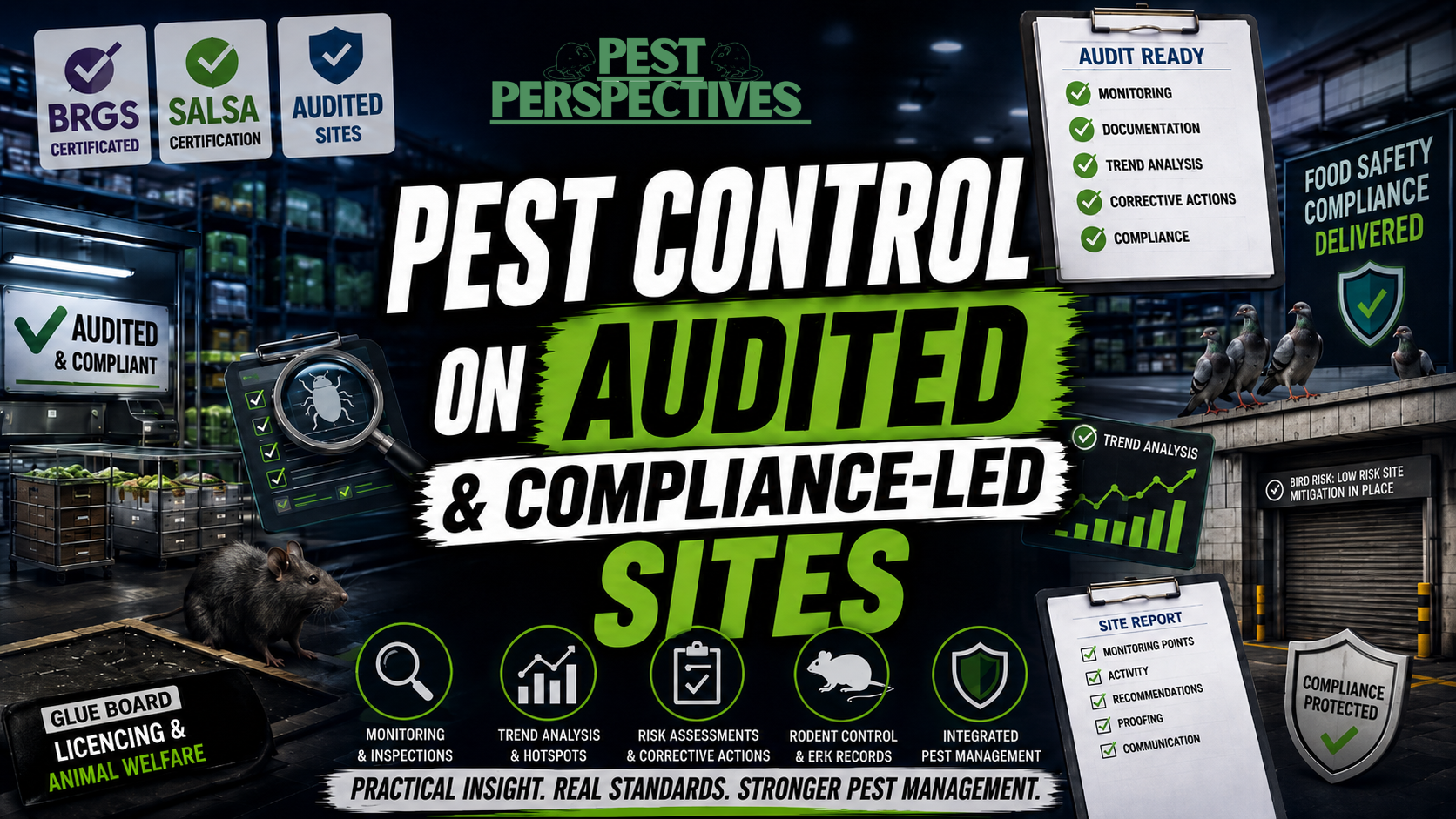
Audited Pest Control Sites, BRCGS & Field Biology: Raising Standards in Professional Pest Management
The Complexity of Compliance-Led Pest Control
Pest control on audited sites isn’t just about placing baits and traps. It’s a structured, evidence-led discipline where every action must be documented, justified, and aligned with industry standards. For technicians and business owners working in this space, understanding the nuances can be the difference between a successful contract and a failed audit.
In this episode of Pest Perspectives, Shaun Muller sits down with Dan Lucas from CSS Pest Services to explore what good pest management looks like when audits, standards, reporting, and trend analysis genuinely matter. Dan’s journey from service technician through to Field Biology specialist offers a masterclass in how to elevate your approach to professional pest control.
From Technician to Field Biologist: Dan’s Journey
Dan’s career trajectory mirrors the evolution many in the industry experience—starting in the field as a service technician, progressing into service management, and ultimately specializing in Field Biology. This progression isn’t just a career path; it represents a deepening understanding of how pest control integrates with broader site management and compliance frameworks.
What makes Dan’s experience particularly valuable is his hands-on understanding of both sides: the technical delivery on the ground and the strategic oversight that audited sites demand. He’s seen firsthand how technicians struggle when they don’t fully understand the site standard they’re working to, and how this gap creates friction between pest control providers and clients.
Understanding Audited Site Standards: BRCGS, SALSA & Beyond
Food manufacturing and processing sites operate under strict compliance regimes. BRCGS (British Retail Consortium Global Standards) and SALSA (Sustainable Assurance and Loyalty Standards) are two of the most common frameworks, but each site’s requirements can vary significantly.
The critical insight here is simple yet often overlooked: you must understand the specific standard your client operates under. A pest control provider working to BRCGS requirements might approach monitoring, documentation, and corrective actions differently than one working to SALSA. Neither is wrong—but misalignment creates audit failures.
Dan emphasizes that technicians should arrive on site with knowledge of:
- The specific standard the site operates under
- What the audit protocol expects from pest control records
- How pest management integrates with the site’s broader food safety plan
- What documentation the site’s auditors will scrutinize
This preparation transforms a routine service visit into a strategic engagement where every action supports the site’s compliance objectives.
The Role of Field Biologists in Raising Standards
Field Biologists represent a significant step forward in professional pest management. These specialists conduct detailed inspections that go beyond routine servicing—they assess pest risk, identify vulnerabilities, map hotspots, and provide strategic recommendations.
For audited sites, a Field Biologist inspection offers several advantages:
Evidence-based assessments – Rather than relying on assumption, Field Biologists conduct thorough site surveys to identify actual pest activity, entry points, and risk factors.
Trend analysis and hotspot mapping – By analyzing monitoring data over time, Field Biologists can identify patterns that technicians might miss, enabling proactive interventions before problems escalate.
Corrective action support – When audit findings identify pest management gaps, Field Biologists can recommend specific, evidence-backed solutions tailored to the site’s vulnerabilities.
Quality assurance – Regular Field Biologist reviews ensure service quality remains consistent and aligned with the site standard.
Practical Elements of Audited Site Pest Control
The conversation covers several practical tools and approaches that matter on audited sites:
Pest Risk Assessments
A comprehensive pest risk assessment is the foundation. This isn’t a generic document—it’s a site-specific analysis of what pests pose a genuine threat, where they’re likely to enter, and what conditions might attract them. A strong assessment directly informs the monitoring strategy.
Monitoring Point Checks & EFK Records
Electronic Fly Killer (EFK) records and monitoring point data are crucial audit evidence. Auditors want to see:
- Consistent monitoring at defined points
- Records showing activity levels over time
- Evidence that high-activity areas receive additional attention
- Documentation of corrective actions when thresholds are exceeded
Non-Toxic Bait & Integrated Pest Management
Many audited sites, particularly food manufacturers, prefer or require non-toxic monitoring methods. Glue boards, for example, provide visual evidence of activity without the complications of rodenticide residues or disposal concerns. However, glue board use must align with animal welfare standards and local regulations—proper licensing is essential.
Integrated Pest Management (IPM) isn’t a buzzword on audited sites; it’s a requirement. This means combining monitoring, proofing, hygiene recommendations, and targeted interventions rather than relying solely on chemical control.
Proofing Recommendations
Auditors expect pest control providers to identify and recommend proofing measures. Whether it’s sealing entry points, installing bird netting around loading bays, or recommending canopy improvements, these recommendations should be specific, prioritized, and linked to actual risk observations.
Technician Kit for Audited Sites
Dan discusses what technicians should carry when working on compliance-led sites. Beyond standard tools, this includes:
- Documentation templates aligned with the site’s audit standard
- Monitoring record sheets and trend analysis tools
- Photographic evidence capability
- Proofing assessment checklists
- Communication templates for reporting findings
The message is clear: preparation and documentation transform service delivery. A technician who arrives with the right tools and knowledge delivers measurable value to audited sites.
Communication Between Pest Controllers and Clients
One theme emerges repeatedly: communication matters. Audited sites need pest control providers who can:
- Explain why specific monitoring points were chosen
- Discuss trend data and what it means for site security
- Recommend corrective actions with clear justification
- Update site management promptly when issues arise
- Provide documentation that auditors can easily understand
This isn’t just about being professional—it’s about building trust and demonstrating that your pest control service actively supports the site’s compliance objectives.
Raising Industry Standards
Perhaps the broader takeaway from Dan’s perspective is that Field Biology and structured pest management on audited sites represent the direction the industry is moving. As food safety standards tighten and audit expectations evolve, pest control providers who embrace evidence-led practices, meticulous documentation, and strategic monitoring will increasingly be the ones winning and retaining contracts.
For technicians, this means investing in understanding site standards, developing assessment skills, and recognizing that pest control on audited sites is as much about communication and documentation as it is about technical execution.
Ready to Deepen Your Knowledge?
This episode provides practical, field-tested insights that apply whether you’re a technician looking to improve your approach to audited sites, a service manager developing protocols, or a business owner considering how to position your company for compliance-led contracts.
Listen to the full episode of Pest Perspectives Podcast now to hear Dan’s detailed discussion on BRCGS pest control, Field Biologist inspections, trend analysis, proofing strategies, and much more. Subscribe for weekly episodes delivering no-nonsense, practical guidance for pest control professionals.