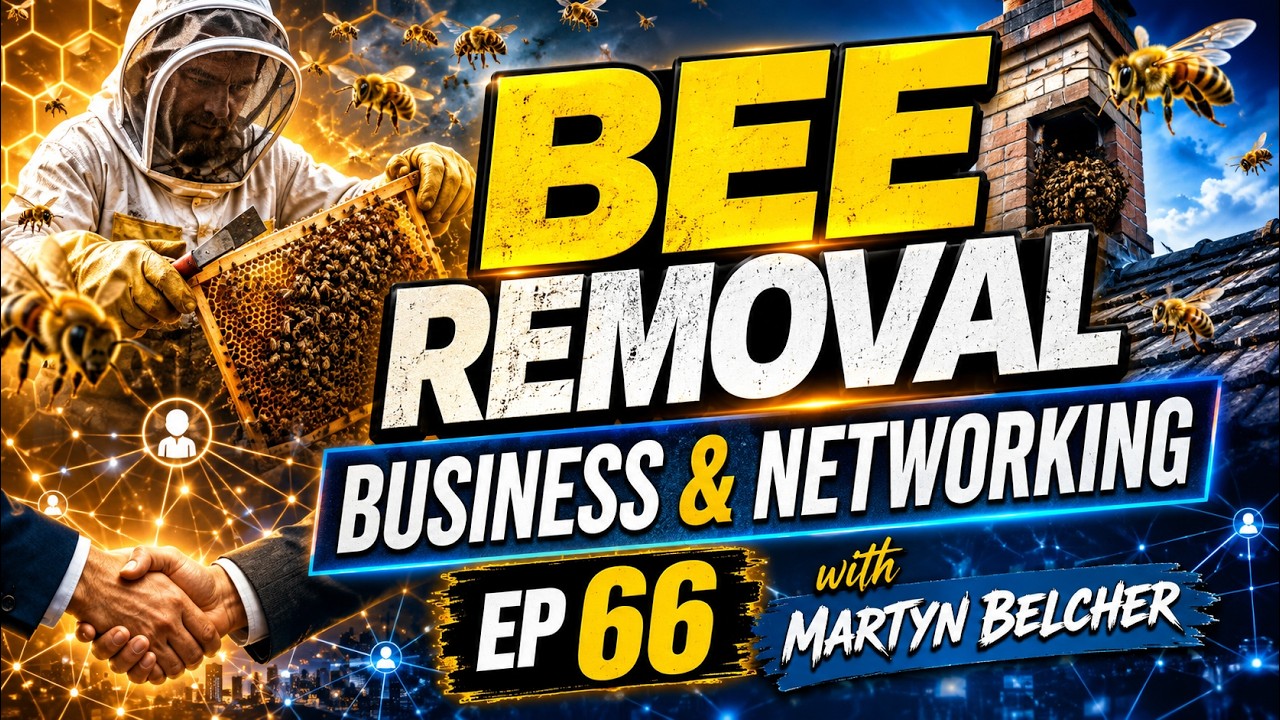
Bee Removal, Business & Industry Networking: Insights from Martyn Belcher of ABM Pest Control
Building a Career in Pest Control: From Coal Mining to Specialist Operations
Martyn Belcher’s journey into pest control is far from the typical path. Beginning his career as a coal miner, Martyn’s transition into the pest management industry demonstrates something crucial: opportunity and adaptability can take you further than a predetermined career plan ever could.
After mining, Martyn moved into hospital-based pest management, where he gained foundational knowledge in rodent control, hygiene protocols, and working within regulated environments. This experience proved invaluable. Rather than staying in that role, he recognised an opportunity to develop his own specialist pest control business, eventually building ABM Pest Control into a respected operation in the Mansfield area.
What’s striking about Martyn’s story is how each role—from mining to hospital pest management to independent operator—equipped him with skills that compounded over time. For technicians and business owners listening, the lesson is clear: resilience, willingness to learn, and the ability to recognise and act on opportunity are just as important as technical knowledge.
Professional Bee Removal: It’s Not As Simple As “Saving the Bees”
One of the most enlightening sections of this episode focuses on professional bee removal—a service that sits at the intersection of pest management, wildlife care, and genuine expertise.
The Beekeeper vs. The Bee Remover
There’s a critical distinction that many people miss: a beekeeper collecting a simple swarm from a branch or fence post is doing something very different from a trained bee remover extracting a colony from inside a chimney, roof void, or listed building.
A swarm—a natural phenomenon where a colony splits and seeks a new home—is relatively straightforward. A beekeeper can often collect it safely into a box. But when bees have already established themselves inside a building structure, the situation becomes far more complex. You’re no longer dealing with a temporary gathering; you’re dealing with an established colony that’s built comb, stored honey, and raised brood.
Why Old Colonies Present Unique Challenges
Older, established colonies are particularly challenging. They’ve had time to build extensive comb networks, accumulate resources, and in some cases, develop health issues. This is where disease risk becomes a genuine concern.
Martyn emphasises an important point: “saving the bees” isn’t always the right answer. If a colony is diseased, contaminated, or aggressive, removing it to introduce it elsewhere isn’t a solution—it’s a problem transfer. Understanding colony health, recognising signs of disease, and knowing when removal isn’t appropriate is part of professional responsibility.
Essential Equipment for Safe Inspection and Planning
Modern bee removal requires proper tools:
- Drones – for safe aerial inspection of roof spaces and high access areas
- Chimney cameras – to visualise what’s happening inside flues without causing damage
- Pole cameras – for inspecting eaves, soffits, and other difficult-access areas
- Protective equipment – appropriate PPE for bee removal work
These tools aren’t luxuries; they’re necessities for safe, professional work. They allow you to assess the situation properly before committing to removal, plan your approach, and minimise risk to yourself, the customer, and the bees.
Key Health Considerations
The episode touches on several important bee health factors:
Dirty Comb – Over time, comb can accumulate debris, disease spores, and pathogens. This is a legitimate reason to be cautious about relocation.
Varroa Mites – These parasites weaken colonies and spread disease. An untreated colony with high varroa levels may not survive relocation.
Quarantine Protocols – Professional bee removal sometimes requires understanding quarantine requirements, especially if there’s any suspicion of notifiable diseases.
Colony Strength – A weak colony may not survive the stress of removal, regardless of good intentions.
The Power of Networking in Pest Control
Perhaps surprisingly, one of the most valuable sections of this episode isn’t about pest control techniques at all—it’s about business relationships.
Moving Beyond Competition
Martyn shares a perspective that challenges the “every pest controller is my competitor” mentality. In reality, no single technician or small business can serve every customer perfectly. Specialisations differ. Availability differs. Service areas differ.
Rather than viewing other local pest professionals as threats, Martyn advocates for a collaborative approach:
- Passing referrals – When you can’t handle a job, referring it to a trusted colleague builds goodwill and ensures customers get the right service
- Sharing knowledge – Discussing techniques, problem-solving together, and learning from peers raises industry standards
- Building trusted relationships – A network of reliable professionals means you have people to call when you need advice, backup, or specialist input
The Business Case for Collaboration
This approach isn’t altruistic—it’s smart business. When customers know you’ll refer them to the right specialist rather than forcing them into an unsuitable service, they trust you more. When you have a network of colleagues you can rely on, you can take on more diverse work. When you’re part of a community rather than an island, you’re more resilient.
For sole traders and small pest control businesses, this is particularly important. You can’t be an expert in everything. Networking allows you to extend your capabilities without overextending yourself.
Industry Bodies, Credentials, and Continued Professional Development
The episode also covers the value of industry involvement:
- TrustMark certification – Third-party validation of your standards and practices
- NPTA membership – Connection to the broader pest management community and access to resources
- Continued Professional Development (CPD) – Staying current with regulations, techniques, and industry standards
These aren’t just boxes to tick. They demonstrate commitment to your profession and give customers confidence in your work.
Key Takeaways for Technicians and Business Owners
- Bee removal requires specialist knowledge and equipment – It’s not a simple extension of general pest control work
- Professional responsibility sometimes means saying no – Not every colony should be relocated
- Networking strengthens your business – Collaboration beats competition in the long run
- Career development is ongoing – Stay engaged with your industry, pursue qualifications, and keep learning
- Opportunity and resilience matter as much as technical skill – Building a career is as much about adaptability as expertise
Ready to Dive Deeper?
This episode covers far more ground than we can capture in a blog post—from the technical details of bee removal operations to practical advice on building local pest control networks, and insights into what makes a sustainable career in pest management.
Listen to the full episode now to hear Martyn’s complete story, get the detailed technical discussion on bee removal, and discover how to build stronger professional relationships in your local pest control community.
Subscribe to Pest Perspectives for weekly, field-tested insights that matter to technicians and business owners.