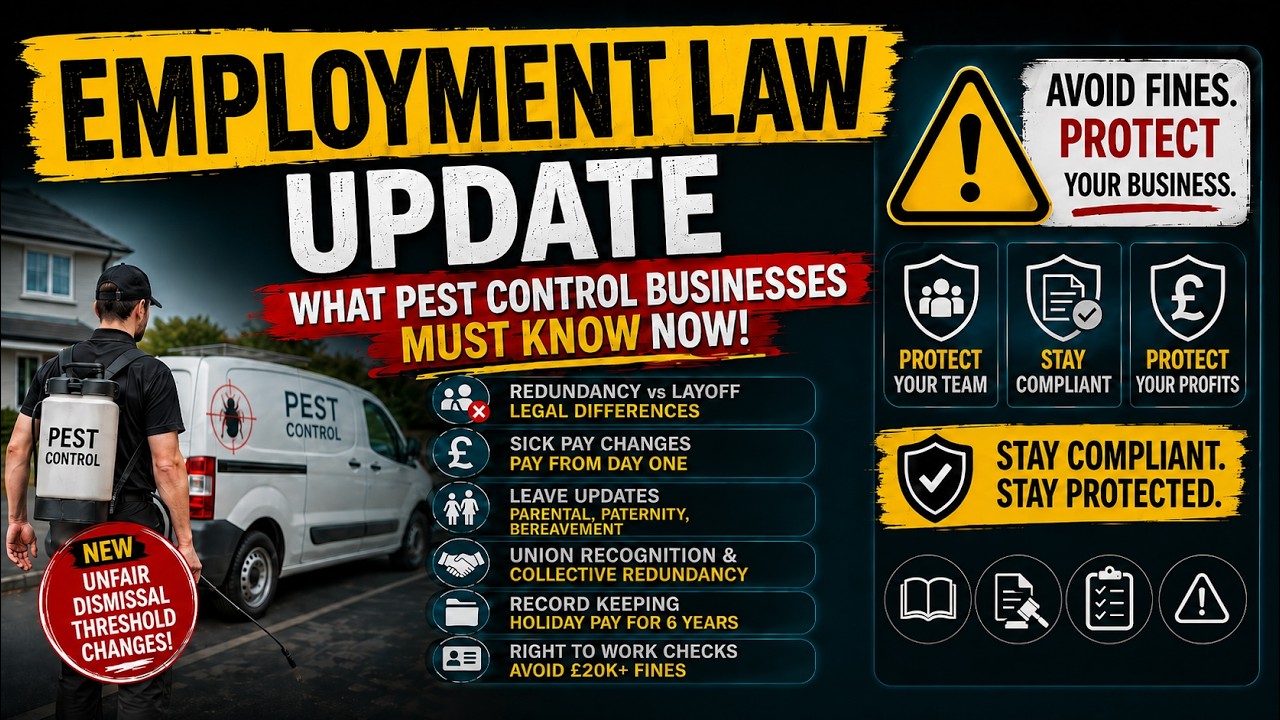
Employment Law for Pest Control Owners: Redundancy vs Layoff Explained
Why Employment Law Matters to Your Pest Control Business
Running a successful pest control operation means juggling field schedules, client relationships, and compliance requirements. But there’s one area many business owners overlook until it costs them: employment law.
The landscape is constantly shifting. New regulations around statutory sick pay, parental leave, right-to-work checks, and dismissal procedures affect how you hire, manage, and—sometimes—let go of staff. Get it wrong, and you’re facing tribunal claims, fines, and reputational damage. Get it right, and you protect your business while treating your team fairly.
In Episode 63 of Pest Perspectives, we sat down with Allison from Metis HR to unpack the employment law updates that matter most to pest control business owners and managers. Here are the key takeaways you need to act on today.
Redundancy vs Layoff: Know the Legal Difference
One of the most misunderstood distinctions in employment law is the difference between redundancy and a layoff. Many business owners use these terms interchangeably—but legally, they’re worlds apart.
Redundancy occurs when a role or position is no longer needed due to business restructuring, closure, or genuine operational change. When you make someone redundant, you have statutory obligations: consultation periods, selection criteria, and redundancy payments. You can’t simply dismiss someone because work is slow or you’ve decided to restructure without following proper procedures.
Layoff, by contrast, is a temporary suspension of work—often due to seasonal fluctuations or short-term business challenges. During a layoff, employees retain their employment but aren’t actively working. The legal framework is different, and your obligations shift accordingly.
For pest control businesses with seasonal variations (think summer booms and winter slowdowns), understanding this distinction is crucial. Misclassifying a temporary slowdown as a redundancy could land you with unfair dismissal claims.
Statutory Sick Pay: New Rules from Day One
Here’s a significant change that affects day-to-day management: statutory sick pay now applies from the first day of absence, rather than after three days as it previously did.
This shift means:
- Immediate liability: You’re paying from day one, so accurate absence tracking is non-negotiable
- Clear categorisation: You need to distinguish between genuine sickness, disability-related absences, and other leave types
- Documentation: Keep records of absence reasons and medical evidence where appropriate
The practical implication? You can’t treat the first three days as a “free pass” anymore. Set clear absence reporting procedures, ensure employees understand what constitutes sickness, and maintain meticulous records. This protects both you and your team by creating transparency around absence management.
Parental, Bereavement, and Paternity Leave Updates
Employment law recognises major life events, and the rules around parental, bereavement, and paternity leave have evolved. These aren’t niche benefits—they’re statutory rights that your team members can claim.
Understanding your obligations here prevents surprises when a technician requests time off for a new child, bereavement, or family emergency. Make sure your contracts and policies clearly outline:
- Statutory parental leave entitlements
- Bereavement leave provisions
- Paternity leave rights and duration
- How these interact with annual leave
Clear communication upfront reduces friction and demonstrates that your business operates with integrity.
Trade Union Recognition and Collective Redundancy
If your business is large enough to have unionised staff, or if you’re expanding in that direction, trade union recognition carries specific legal implications—especially around collective redundancy.
When making multiple redundancies, you have consultation obligations with recognised unions. These aren’t bureaucratic hurdles; they’re safeguards that protect employees and your business. Failing to consult properly can result in protective awards and tribunal claims.
Record-Keeping: Six Years of Holiday Pay Documentation
Here’s a compliance requirement that catches many business owners off guard: you must keep records of holiday pay and annual leave for six years.
This isn’t just about storing spreadsheets in a folder. You need:
- Clear records of holidays taken and accrued
- Holiday pay calculations and payments made
- Any disputes or adjustments documented
- Audit trails showing compliance
For a small pest control operator managing a handful of technicians, this might feel excessive. But if a former employee brings a claim years later, those records are your defence. Set up a simple system now—whether it’s a spreadsheet, HR software, or a dedicated system—and stick to it.
Right-to-Work Checks: Non-Compliance Carries Heavy Fines
One of the most straightforward compliance requirements is also one of the most frequently missed: right-to-work checks.
Before anyone starts work, you must verify their legal right to work in the UK. This isn’t optional, and the fines for non-compliance are substantial. The process involves:
- Checking original documents (passport, visa, etc.)
- Recording details of the check
- Keeping copies on file
- Repeating checks for visa-sponsored employees at appropriate intervals
It takes 15 minutes per employee. The cost of getting it wrong? Thousands in fines, plus potential liability for employing illegal workers.
Sexual Harassment Risk Assessments and Employer Duties
Employment law increasingly requires businesses to conduct sexual harassment risk assessments and implement preventative measures. This isn’t just a corporate concern—it applies to all businesses, including pest control operations.
Your responsibilities include:
- Identifying potential harassment risks in your workplace (including vehicles and client sites)
- Implementing preventative measures
- Ensuring clear reporting procedures
- Training staff on acceptable conduct
For a field-based industry like pest control, where technicians work in client homes and vehicles, this takes on particular importance. Establish clear policies, train your team, and create safe channels for reporting concerns.
Unfair Dismissal Thresholds and Probation Periods
Changes to unfair dismissal thresholds affect when employees can bring claims against you. Understanding probation periods and how they interact with dismissal law helps you manage performance issues effectively.
If you’re considering letting someone go, ensure you’ve followed proper procedures: clear warnings, opportunities to improve, and fair process. Document everything. This protects both your business and your employee.
Training Agreements: Protecting Your Investment
Finally, if you’re investing in training—whether it’s pest control certifications, vehicle operation, or safety courses—you can protect that investment through training agreements. These clauses allow you to recover training costs if an employee leaves within a specified period.
Properly drafted training agreements are enforceable and fair to both parties. They incentivise staff retention and ensure you’re not left out of pocket when you’ve invested in developing someone’s skills.
Take Action Today
Employment law compliance isn’t a one-time tick-box exercise. It’s an ongoing responsibility that evolves with regulation changes. The updates covered here represent just some of the changes affecting pest control businesses.
Want the full breakdown? Listen to Episode 63 of Pest Perspectives, where Allison from Metis HR walks through over 20 employment law updates with practical, actionable steps you can implement immediately. Whether you’re a sole trader managing your first employee or a multi-van operation, this episode delivers the clarity you need to run your business with confidence.
For HR support tailored to pest control businesses, visit Metis HR.