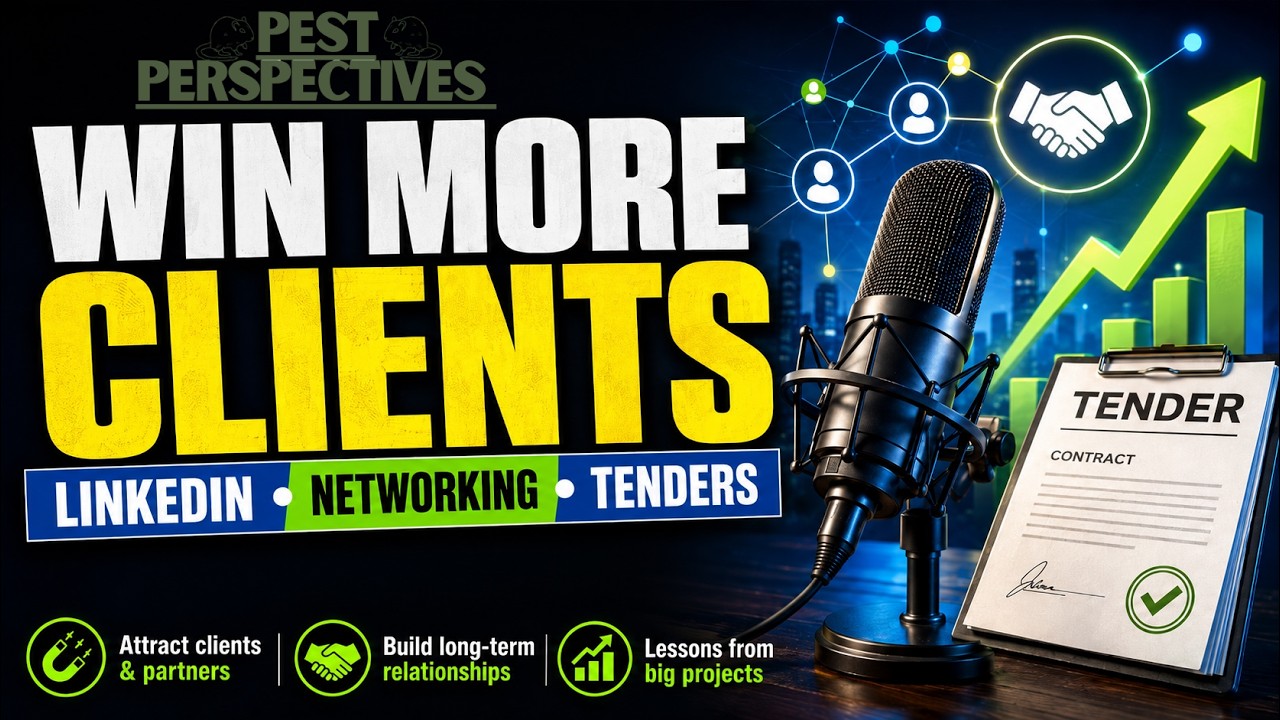
LinkedIn, Tenders and Turf: How Service Businesses Build Reputation Online and On the Ground
Building a thriving service business takes more than technical skill—it requires a visible reputation that works both online and in the real world. In this episode, we speak with Trudy Martin of MBS Grounds Maintenance about converting LinkedIn visibility into client relationships, turning networking events into long-term collaborations, and winning tenders that actually deliver results.
The Reality of Reputation in Service Industries
If you run a pest control, grounds maintenance, or any hands-on service business, you’ve probably felt the tension: you’re excellent at what you do, but how do potential clients actually find you? And more importantly, how do they trust you enough to hire you?
That’s the question at the heart of Episode 62 of Pest Perspectives, where host Shaun sits down with Trudy Martin, managing director of MBS Grounds Maintenance Ltd. Trudy’s career path offers a masterclass in building visibility and credibility across multiple channels—from LinkedIn presence to event networking to successful tender submissions.
What makes this conversation particularly valuable is that Trudy didn’t start with a marketing background. She came up through hands-on landscaping and grounds work. Her insights, therefore, aren’t theoretical—they’re earned through real projects, real relationships, and real business growth.
Why LinkedIn Matters (And How to Actually Use It)
One of the first things Trudy addresses is the elephant in the room: LinkedIn. For many technicians and business owners, it feels like another social media platform to maintain. Why bother?
Here’s the shift in thinking: LinkedIn isn’t social media in the traditional sense. It’s a professional directory where decision-makers, procurement teams, and potential collaborators actively search for partners and suppliers. For service businesses, it’s where your reputation goes to work before you do.
Trudy’s approach to LinkedIn is refreshingly practical:
Start with a profile that reflects your actual role. If you’re a business owner, your profile should position you as someone with expertise and leadership in your field. Include real examples of work you’ve done. For Trudy, that means landscape and grounds maintenance projects—but the principle applies equally to pest control. Show what you do, not just what your company does.
Create content that demonstrates expertise. This doesn’t mean daily posts or viral content. Instead, Trudy shares insights from her experience: lessons learned from large projects, industry trends, and practical advice. When you post about something you genuinely know, it builds credibility. Potential clients and partners see you as someone worth listening to.
Engage authentically. LinkedIn algorithms reward genuine interaction. That means commenting thoughtfully on others’ posts, sharing relevant industry content, and building actual relationships rather than just collecting connections.
The goal isn’t vanity metrics. It’s visibility to the right people at the right time.
Networking Events: Beyond the Handshake
Networking events can feel like a necessary evil—awkward conversations, weak coffee, and business cards that disappear into a drawer. Trudy’s approach transforms them into genuine business development opportunities.
The key difference? Follow-up and genuine relationship building.
When Trudy meets someone at an event, she doesn’t just collect a contact. She remembers the conversation, finds them on LinkedIn, and follows up with a personalized message. She might reference something specific they discussed, or share a relevant article. The goal is to move from “person I met once” to “professional contact I’m actually building a relationship with.”
This approach converts event contacts into long-term collaborators and referral partners. Over time, these relationships become a significant source of business—not through aggressive selling, but through genuine mutual respect and the understanding that you can help each other succeed.
For pest control businesses, this might mean building relationships with facilities managers, property developers, estate agents, or other service providers. The networking event is just the first conversation.
Tendering: What Really Works in Practice
One of the most valuable parts of this episode is Trudy’s candid discussion of tendering—how to win them, and what happens after you do.
Tendering is often seen as a lottery: you submit a bid, hope for the best, and move on. But Trudy’s experience with large projects reveals a more nuanced reality.
Preparation is everything. Before you submit a tender, understand what the client actually needs. This might mean asking clarifying questions, visiting the site, or having conversations with procurement teams. The tender document is rarely the complete picture.
Your reputation precedes you. If you’ve already built visibility through LinkedIn, networking events, and previous work, you’re not starting from zero. The client has likely researched you. This is where your online presence and track record matter enormously.
Delivery is the final test. Winning a tender is only half the battle. How you manage the project, communicate with the client, and handle challenges determines whether you’ll win future work. Trudy emphasizes that one successful project often leads to repeat business and referrals—making the tendering process less critical over time.
For pest control businesses, the same principles apply. A commercial client who sees you deliver results becomes a long-term partner and a source of referrals to other businesses.
Cross-Industry Lessons for Your Service Business
While Trudy’s background is in grounds maintenance and landscaping, the principles she shares apply directly to pest control, drainage surveys, wildlife management, and any service business.
Build visibility in your field. Whether through LinkedIn, industry events, or local reputation, make sure potential clients know you exist and what you’re good at.
Invest in relationships, not just transactions. The businesses that thrive long-term are those built on genuine relationships with clients, partners, and referral sources.
Deliver on your promises. Your reputation is built on what you actually do, not what you say you’ll do. Each project is an opportunity to build trust or lose it.
Stay visible and engaged. Don’t disappear between projects. Keep your network warm, share relevant insights, and stay top-of-mind when opportunities arise.
The Bigger Picture
What emerges from this conversation is a coherent strategy for business growth that works across service industries. It’s not glamorous or quick, but it’s effective: build genuine expertise, share it visibly, cultivate real relationships, and deliver exceptional results.
For technicians looking to move into business ownership, or business owners wanting to scale, Trudy’s practical approach offers a roadmap. The tools—LinkedIn, networking events, tendering platforms—are available to everyone. The difference is in how intentionally you use them.
Ready to Dig Deeper?
This episode is packed with actionable insights, real examples, and practical checklists you can apply to your own business immediately. Trudy also shares specific lessons from large-scale projects that reveal what procurement teams actually look for and how to stand out.
Listen to the full episode now and discover how to build a reputation that works both online and on the ground.
Want to connect with Trudy directly? Find her on LinkedIn or visit MBS Grounds Maintenance to see her work in action.
Subscribe to Pest Perspectives for weekly, no-nonsense insight into business growth, technical excellence, and industry best practices. New episodes every week.