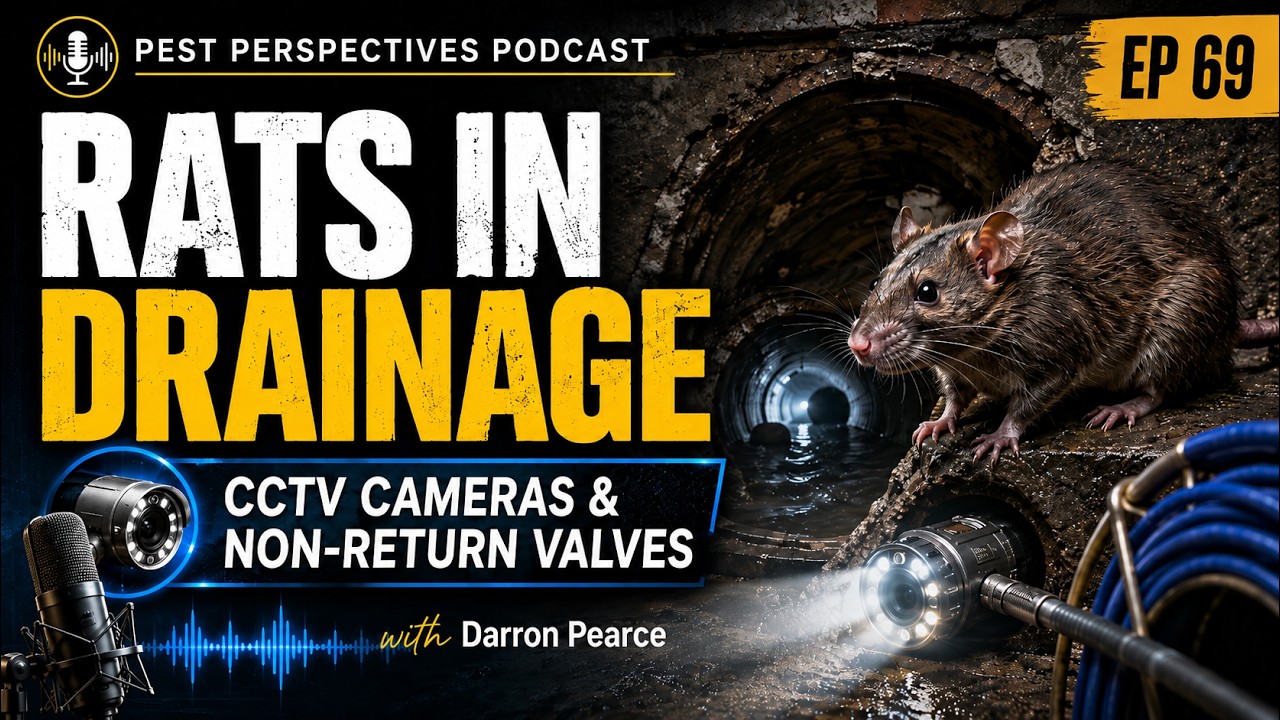
Rats in Drainage Systems: Why Your Rodent Problem Might Be Coming From Below Ground
The Hidden Highway: Understanding Rats in Drainage Systems
If you’ve been dealing with repeat rat activity that just won’t quit, there’s a good chance you’ve been looking in the wrong place. While most pest control responses focus on internal baiting and external proofing, the real culprit could be lurking beneath your feet—quite literally in the drainage system.
In this week’s episode of Pest Perspectives, host Shaun Muller sits down with Darron Pearce from RATTRAXS to explore one of the most overlooked areas of rodent control: rats using drainage systems to gain access into homes and commercial buildings. With experience spanning both the pest control and drainage industries, Darron brings a unique perspective that challenges conventional approaches to rodent management.
The conversation reveals a critical truth: many recurring rat problems persist not because of inadequate treatment, but because the primary entry point has never been properly identified.
Why Rats Love Drainage Systems
Drainage systems are essentially motorways for rodents. They provide:
- Protected pathways away from predators and environmental hazards
- Access to moisture and potential food sources
- Shelter within pipes and chambers
- Multiple entry and exit points throughout a property
Rats don’t need large openings to exploit drainage systems. They can squeeze through surprisingly small defects, cracks, and damaged sections of pipework. The problem is compounded when property owners and even some pest controllers don’t fully understand the complexity of modern drainage infrastructure.
The Critical Role of Evidence-Led Investigation
Here’s where the episode gets really practical. Shaun and Darron emphasize that evidence-led investigation is absolutely essential when dealing with persistent rat problems. This means going beyond the obvious and asking difficult questions:
- Where exactly are the rats entering?
- Are they using foul drainage, surface water systems, or both?
- What defects exist in the pipework?
- Are there hidden chambers or flexible connectors creating vulnerabilities?
- Is the problem a result of recent building extension work?
Simply setting traps and laying bait without understanding these factors is like treating symptoms without addressing the disease. You might see temporary success, but the rats will return once you’ve stopped the active control measures.
CCTV Drain Inspections: The Game Changer
This is where modern technology becomes invaluable. CCTV drain camera inspections allow pest controllers and drainage specialists to see exactly what’s happening inside the pipe network. Rather than guessing or relying on historical knowledge of a property, you get visual evidence of:
- Cracks and fractures in pipework
- Collapsed sections
- Tree root intrusion
- Misaligned joints
- Debris accumulation
- Damaged flexible connectors
For pest controllers, the key insight is knowing when to involve specialist drainage professionals. You don’t need to become a drainage expert, but you do need to recognize when a property’s drainage system requires investigation beyond your scope. Building that relationship with a qualified drainage contractor becomes part of your toolkit.
Understanding Foul and Surface Water Systems
The episode highlights an important distinction that many don’t fully grasp: foul drainage and surface water drainage are separate systems, and rats can exploit both.
Foul drainage carries sewage and wastewater from toilets, sinks, and showers. Rats are attracted to this system because it contains food residues and offers a route through the building.
Surface water drainage (including Sustainable Drainage Systems—SUDS) handles rainwater. While seemingly less attractive to rats, defects in surface water systems can still provide entry routes, particularly in areas where surface and foul water systems interconnect or where old systems haven’t been properly maintained.
Understanding which system is involved in a particular infestation is crucial for implementing the right solution.
Non-Return Valves: The Prevention Solution
Non-return valves (also called one-way valves or flap valves) are a practical control measure, but they’re not a universal solution. The episode covers several critical points:
When they’re useful: Non-return valves can prevent rats from traveling up drainage pipes into properties, particularly at key points like toilet pan connectors or main drain access points.
Installation is everything: A poorly fitted non-return valve is worse than useless—it can create blockages or fail entirely. Correct installation by a qualified drainage professional is non-negotiable.
Flow testing matters: After installation, the system must be flow-tested to ensure it works correctly and doesn’t impede normal drainage. A valve that blocks water flow creates its own problems.
Ownership and responsibility: Understanding whether you’re dealing with private drains (the property owner’s responsibility) or public sewers (the water company’s responsibility) affects what solutions are actually available and who’s responsible for implementation.
Practical Takeaways for Pest Professionals
If you’re listening to this as a pest controller or business owner, here’s what you should take away:
-
Don’t assume baiting alone will solve repeat rat problems. Investigate the drainage system.
-
Develop relationships with drainage specialists. You don’t need to do the drain work yourself, but you need to know who to call.
-
Ask the right questions when assessing a property. Where are the entry points? What’s the drainage layout? When was the property built or extended?
-
Use CCTV inspection data to build your case for remedial work. Visual evidence is far more persuasive than assumptions.
-
Understand the difference between foul and surface water systems in your local area.
-
Know your limitations. Non-return valves have a role, but they’re not a standalone solution and must be fitted correctly.
The Bigger Picture
What makes this episode particularly valuable is that it addresses a gap in many pest controllers’ knowledge base. Drainage systems aren’t glamorous, and they’re not always immediately visible, but they’re absolutely critical to solving persistent rodent problems.
For facilities managers, landlords, and housing providers dealing with recurring rat complaints, this episode offers a framework for finally getting to the root cause. For commercial clients frustrated by rat activity that keeps returning despite treatment, the answer might be a single CCTV inspection away.
Ready to Dig Deeper?
This episode is packed with practical insights, real-world case studies, and field-tested tactics that go well beyond what we can cover here. Whether you’re a pest control technician, drainage professional, facilities manager, or property owner dealing with persistent rat problems, the full episode of Pest Perspectives with Darron Pearce is essential listening.
Listen to Episode 69 now and discover why your rat problem might be coming from below ground—and what you can actually do about it.
Subscribe to Pest Perspectives for weekly, no-nonsense industry insight delivered straight to your feed. New episodes every week.