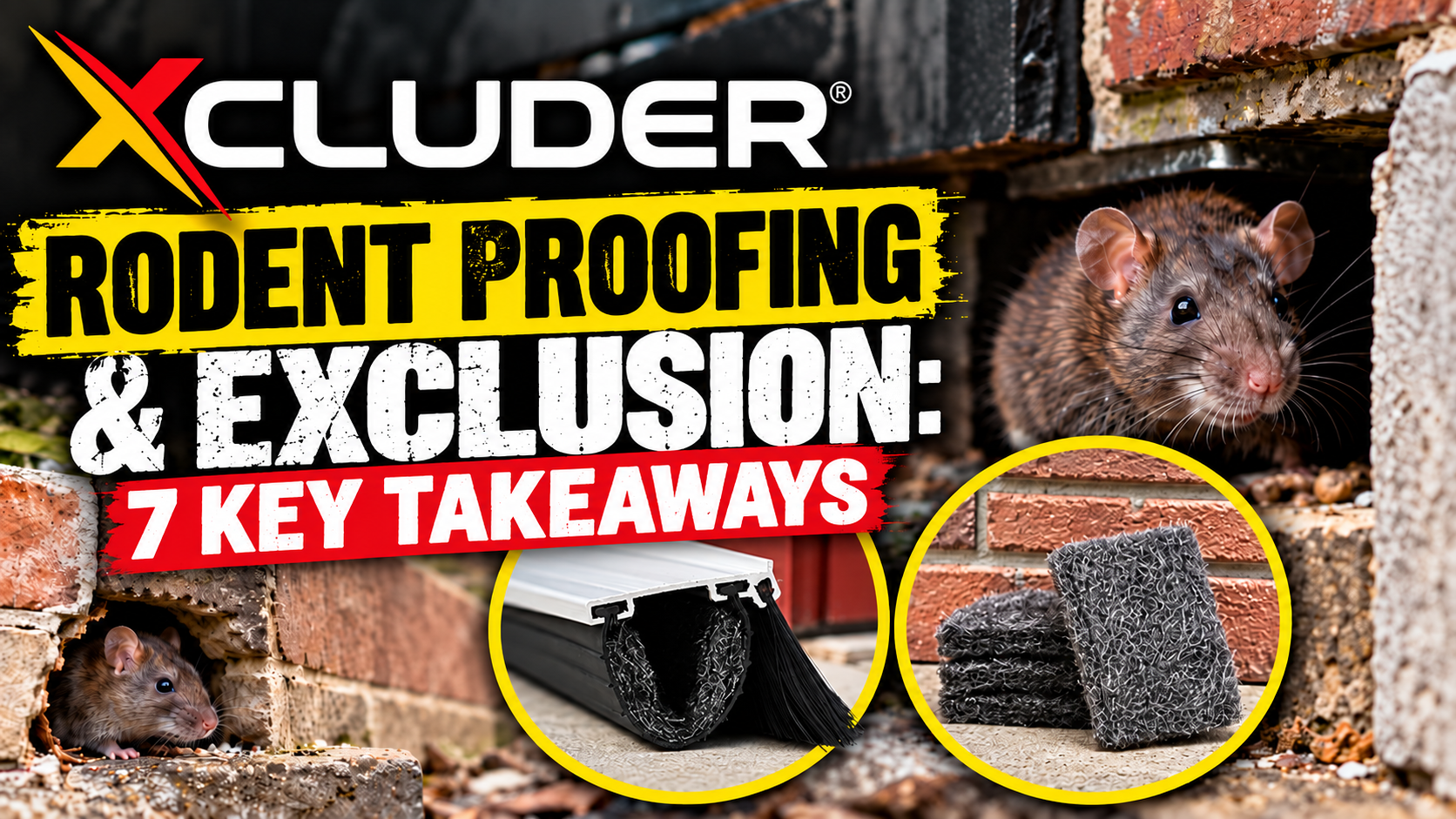
Rodent Proofing & Exclusion: 7 Key Takeaways from Ben Channon
Related Episode
084:Rodent Proofing & Exclusion Tips | Ben Channon, XcluderKey Takeaways
-
Exclusion is Prevention, Not Just Pest Management
Exclusion represents a shift from reactive pest control to prevention. Clients increasingly want to prevent rodent problems entirely rather than call after an infestation, especially in sensitive environments like food manufacturing. -
Food Manufacturing Facilities Demand a Different Approach
Audited environments require understanding facility flow, allergen protocols, and access restrictions. What takes 30 minutes in standard commercial spaces may take much longer navigating hairnets and restricted areas—sometimes with 250+ monitoring traps to service weekly. -
Digital Monitoring Tools Solve Inaccessibility Problems
Real-time monitoring provides visibility into roof voids and interstitial spaces technicians can’t physically reach. While there’s a learning curve and cost, high-tolerance facilities increasingly invest in these systems for risk-based monitoring. -
Proofing Can Be Highly Lucrative
Offering proofing surveys and exclusion work generates substantial revenue, including five-figure jobs on larger properties. Frame it as a tailored solution to specific pest challenges, not aggressive upselling. -
Regional Factors Complicate Guarantees
In the UK, where rats frequently enter via sewers, complete proofing guarantees are unrealistic unless extremely thorough. Clear expectations about protected areas prevent client disappointment. -
Clients Often Resist Full Proofing Solutions
Many property owners skip certain areas to save costs, leaving vulnerabilities. Educate clients on risk-based recommendations to help them make informed decisions. -
Your Career Path Shapes Your Expertise
Real-world experience across different facility types builds the practical knowledge that makes you valuable to clients.
Want to hear more? Listen to the full episode for Ben’s specific techniques on identifying entry points, material selection, and managing technician teams in audited facilities.